













| Alternative Names | Glucagon R, Glucagon receptor |
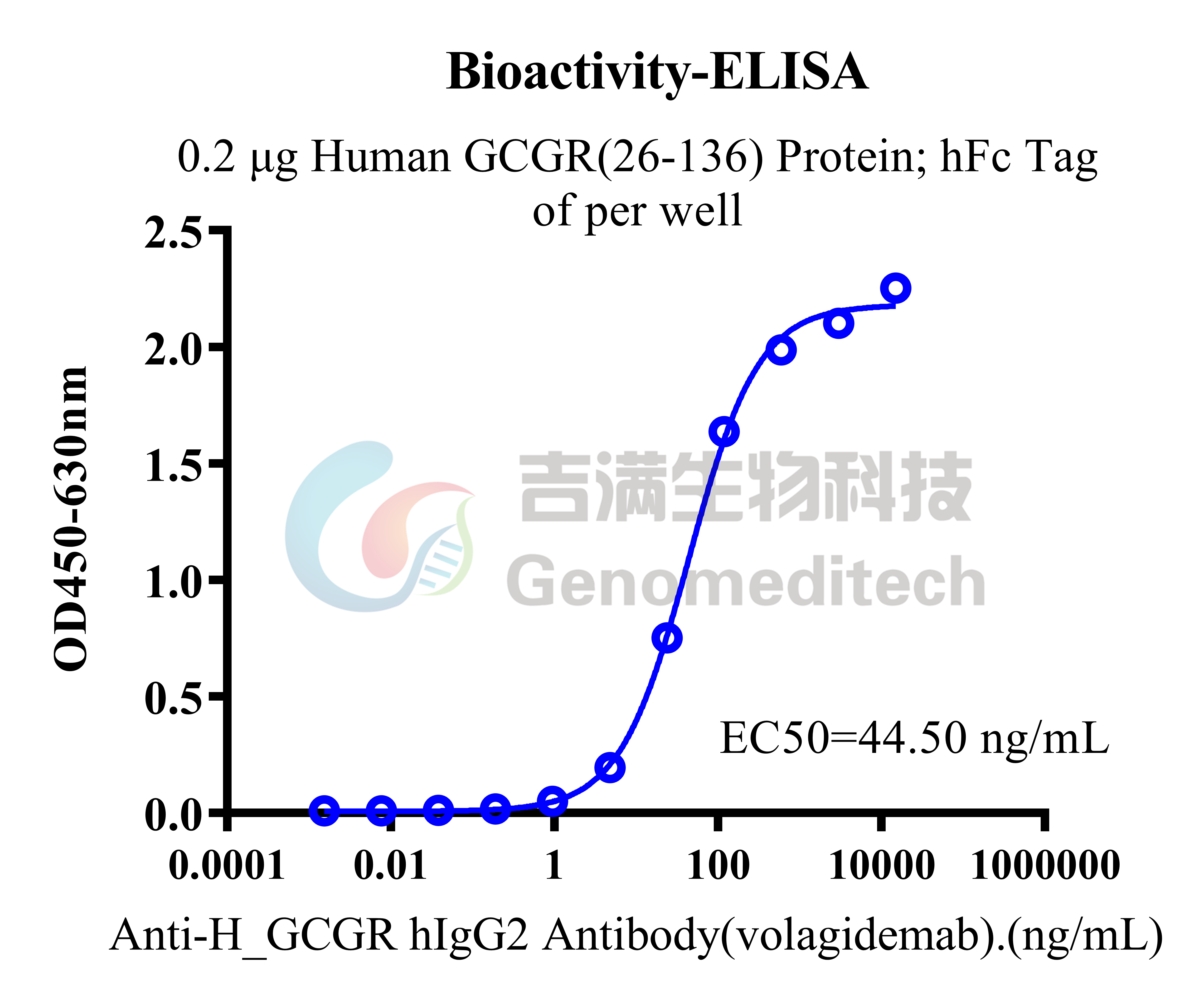
| Source | Human GCGR(26-136) Protein; hFc Tag (GM-88750RP) is expressed from human 293 cells (HEK-293). It contains AA Ala 26 - Lys 136 (Accession # P47871-1). This protein carries a hFc tag at the C-terminus. |
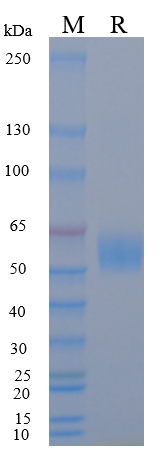
| Purity | > 95% as determined by SDS-PAGE |
| Endotoxin | < 1 EU/μg, determined by LAL gel clotting assay |
| Predicted Mol Mass | 39.0 kDa |
| Formulation | Supplied as a 0.2 μm filtered solution of PBS, pH7.2-7.4. |
| Description | GCGR protein, full name Glucagon Receptor, also known as GGR or GL-R, is an important G protein-coupled receptor (GPCR) and a member of the class B secretin-like family of peptide hormone receptors. GCGR protein plays a crucial role in regulating glucose homeostasis and energy metabolism by binding to its endogenous ligand glucagon, thereby activating adenylate cyclase and downstream cAMP/PKA signaling pathways to stimulate hepatic glycogenolysis, gluconeogenesis, and lipid oxidation in normal physiological conditions. Currently, GCGR-targeted therapeutic strategies have shown significant clinical promise, with glucagon receptor antagonists (e.g., LY2409021, PF-06291874) and dual or triple agonists targeting GCGR, GLP-1R, and GIPR (e.g., Cotadutide, SAR425899, and retatrutide) being actively investigated in clinical trials for the treatment of T2DM, obesity, and metabolic dysfunction-associated steatohepatitis (MASH). In summary, GCGR protein plays a pivotal role in glucose metabolism and metabolic disease pathogenesis, and holds great significance for understanding metabolic regulation, identifying novel drug targets, developing glucagon-based therapeutics and multi-agonists, and evaluating patient prognosis in diabetes and obesity-related disorders. |
| Alternative Names | Glucagon R, Glucagon receptor |
| Source | Human GCGR(26-136) Protein; hFc Tag (GM-88750RP) is expressed from human 293 cells (HEK-293). It contains AA Ala 26 - Lys 136 (Accession # P47871-1). This protein carries a hFc tag at the C-terminus. |
| Purity | > 95% as determined by SDS-PAGE |
| Endotoxin | < 1 EU/μg, determined by LAL gel clotting assay |
| Predicted Mol Mass | 39.0 kDa |
| Formulation | Supplied as a 0.2 μm filtered solution of PBS, pH7.2-7.4. |
| Description | GCGR protein, full name Glucagon Receptor, also known as GGR or GL-R, is an important G protein-coupled receptor (GPCR) and a member of the class B secretin-like family of peptide hormone receptors. GCGR protein plays a crucial role in regulating glucose homeostasis and energy metabolism by binding to its endogenous ligand glucagon, thereby activating adenylate cyclase and downstream cAMP/PKA signaling pathways to stimulate hepatic glycogenolysis, gluconeogenesis, and lipid oxidation in normal physiological conditions. Currently, GCGR-targeted therapeutic strategies have shown significant clinical promise, with glucagon receptor antagonists (e.g., LY2409021, PF-06291874) and dual or triple agonists targeting GCGR, GLP-1R, and GIPR (e.g., Cotadutide, SAR425899, and retatrutide) being actively investigated in clinical trials for the treatment of T2DM, obesity, and metabolic dysfunction-associated steatohepatitis (MASH). In summary, GCGR protein plays a pivotal role in glucose metabolism and metabolic disease pathogenesis, and holds great significance for understanding metabolic regulation, identifying novel drug targets, developing glucagon-based therapeutics and multi-agonists, and evaluating patient prognosis in diabetes and obesity-related disorders. |