













| Alternative Names | Interleukin-6, BSF2, HSF, IFNB2 |
| Source | Human IL-6 Protein; hFc Tag (GM-88764RP) is expressed from human 293 cells (HEK-293). It contains AA Val 30 - Met 212 (Accession # P05231-1). This protein carries a hFc tag at the N-terminus. |
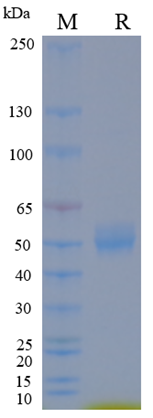
| Purity | > 95% as determined by SDS-PAGE |
| Endotoxin | < 1 EU/μg, determined by LAL gel clotting assay |
| Predicted Mol Mass | 47.6 kDa |
| Formulation | Supplied as a 0.2 μm filtered solution of PBS, pH7.2-7.4. |
| Description | IL-6 protein, full name Interleukin-6, is an important soluble cytokine and a member of the interleukin family. IL-6 protein plays a crucial role in regulating immune responses, inflammation, hematopoiesis, and metabolic processes in normal physiological conditions. Abnormal expression of IL-6 protein is closely associated with the occurrence and development of various malignant tumors and chronic inflammatory diseases, including multiple myeloma, prostate cancer, breast cancer, colorectal cancer, and rheumatoid arthritis. In tumor cells and the tumor microenvironment, overexpression or dysregulated secretion of IL-6 protein can promote tumor cell proliferation, survival, angiogenesis, and metastasis through activation of the JAK/STAT3, PI3K/AKT, and MAPK signaling pathways, thereby contributing to tumor progression and therapy resistance. Elevated serum IL-6 levels are often correlated with poor prognosis and reduced treatment response in cancer patients. In summary, IL-6 protein plays a critical role in inflammation-driven tumorigenesis and cancer progression, and is of great significance for understanding the molecular mechanisms linking chronic inflammation to cancer, developing novel anti-inflammatory and targeted therapeutic strategies, and evaluating patient prognosis, particularly in the context of combination cancer therapy and immune-related adverse event management. |
| Alternative Names | Interleukin-6, BSF2, HSF, IFNB2 |
| Source | Human IL-6 Protein; hFc Tag (GM-88764RP) is expressed from human 293 cells (HEK-293). It contains AA Val 30 - Met 212 (Accession # P05231-1). This protein carries a hFc tag at the N-terminus. |
| Purity | > 95% as determined by SDS-PAGE |
| Endotoxin | < 1 EU/μg, determined by LAL gel clotting assay |
| Predicted Mol Mass | 47.6 kDa |
| Formulation | Supplied as a 0.2 μm filtered solution of PBS, pH7.2-7.4. |
| Description | IL-6 protein, full name Interleukin-6, is an important soluble cytokine and a member of the interleukin family. IL-6 protein plays a crucial role in regulating immune responses, inflammation, hematopoiesis, and metabolic processes in normal physiological conditions. Abnormal expression of IL-6 protein is closely associated with the occurrence and development of various malignant tumors and chronic inflammatory diseases, including multiple myeloma, prostate cancer, breast cancer, colorectal cancer, and rheumatoid arthritis. In tumor cells and the tumor microenvironment, overexpression or dysregulated secretion of IL-6 protein can promote tumor cell proliferation, survival, angiogenesis, and metastasis through activation of the JAK/STAT3, PI3K/AKT, and MAPK signaling pathways, thereby contributing to tumor progression and therapy resistance. Elevated serum IL-6 levels are often correlated with poor prognosis and reduced treatment response in cancer patients. In summary, IL-6 protein plays a critical role in inflammation-driven tumorigenesis and cancer progression, and is of great significance for understanding the molecular mechanisms linking chronic inflammation to cancer, developing novel anti-inflammatory and targeted therapeutic strategies, and evaluating patient prognosis, particularly in the context of combination cancer therapy and immune-related adverse event management. |