














| Alternative Names | CCK4, CCK-4, Tyrosine-protein kinase-like 7, Protein-tyrosine kinase 7, Protein-tyrosine kinase 7 |
| Source | Human PTK7 Protein; His Tag (GM-88572RP) is expressed from human 293 cells (HEK-293). It contains AA Ala 31 - Thr 704 (Accession # Q13308-1). This protein carries a His tag at the C-terminus. |
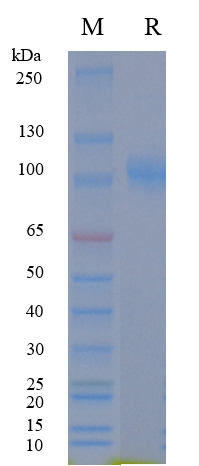
| Purity | > 95% as determined by SDS-PAGE |
| Endotoxin | < 1 EU/μg, determined by LAL gel clotting assay |
| Predicted Mol Mass | 75.4 KDa |
| Formulation | Supplied as a 0.2 μm filtered solution of PBS, pH7.2-7.4. |
| Description | PTK7 protein (Protein Tyrosine Kinase 7), also known as Colon Carcinoma Kinase-4 (CCK-4), is a catalytically defective receptor tyrosine kinase that belongs to the receptor tyrosine kinase (RTK) superfamily. It is encoded by the PTK7 gene and is a protein associated with the human immune system and embryonic development. PTK7 protein was initially discovered in colon carcinoma cells and later detected in various normal tissues, including the central nervous system, hematopoietic stem cells, and immune cells. PTK7 protein regulates the activity of T cells and other immune cells by binding to its co-receptors or interacting with components of the planar cell polarity (PCP) pathway, although its primary ligand remains to be fully elucidated. PTK7 functions as a Wnt co-receptor and plays a role in cell migration, polarity, and immune synapse formation. Research indicates that PTK7 protein plays a significant role in regulating T cell activity, promoting cell migration, and modulating immune responses. Additionally, the aberrant expression of PTK7 protein is associated with tumor development, including colon cancer, breast cancer, lung cancer, and acute myeloid leukemia (AML), as well as with poor prognosis and metastasis, making it a potential target for immunotherapy, including antibody-drug conjugates (ADCs), CAR-T cell therapy, and targeted cancer therapies. |
| Alternative Names | CCK4, CCK-4, Tyrosine-protein kinase-like 7, Protein-tyrosine kinase 7, Protein-tyrosine kinase 7 |
| Source | Human PTK7 Protein; His Tag (GM-88572RP) is expressed from human 293 cells (HEK-293). It contains AA Ala 31 - Thr 704 (Accession # Q13308-1). This protein carries a His tag at the C-terminus. |
| Purity | > 95% as determined by SDS-PAGE |
| Endotoxin | < 1 EU/μg, determined by LAL gel clotting assay |
| Predicted Mol Mass | 75.4 KDa |
| Formulation | Supplied as a 0.2 μm filtered solution of PBS, pH7.2-7.4. |
| Description | PTK7 protein (Protein Tyrosine Kinase 7), also known as Colon Carcinoma Kinase-4 (CCK-4), is a catalytically defective receptor tyrosine kinase that belongs to the receptor tyrosine kinase (RTK) superfamily. It is encoded by the PTK7 gene and is a protein associated with the human immune system and embryonic development. PTK7 protein was initially discovered in colon carcinoma cells and later detected in various normal tissues, including the central nervous system, hematopoietic stem cells, and immune cells. PTK7 protein regulates the activity of T cells and other immune cells by binding to its co-receptors or interacting with components of the planar cell polarity (PCP) pathway, although its primary ligand remains to be fully elucidated. PTK7 functions as a Wnt co-receptor and plays a role in cell migration, polarity, and immune synapse formation. Research indicates that PTK7 protein plays a significant role in regulating T cell activity, promoting cell migration, and modulating immune responses. Additionally, the aberrant expression of PTK7 protein is associated with tumor development, including colon cancer, breast cancer, lung cancer, and acute myeloid leukemia (AML), as well as with poor prognosis and metastasis, making it a potential target for immunotherapy, including antibody-drug conjugates (ADCs), CAR-T cell therapy, and targeted cancer therapies. |