













| Expression System | CHO |
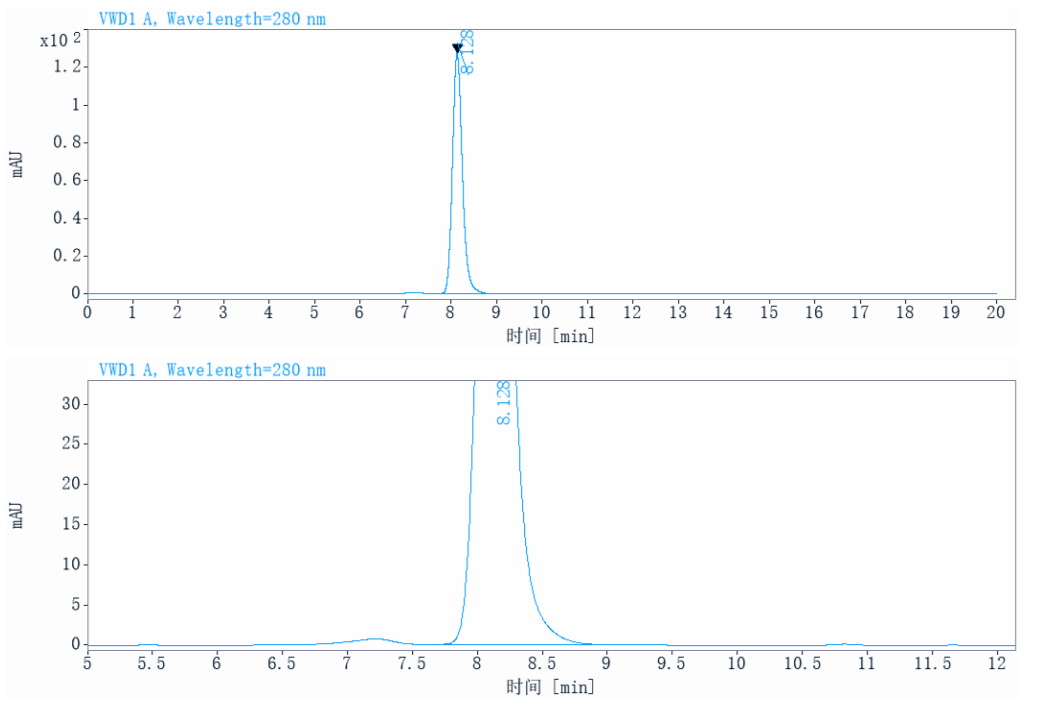
| Aggregation | < 5% as determined by SEC-HPLC |
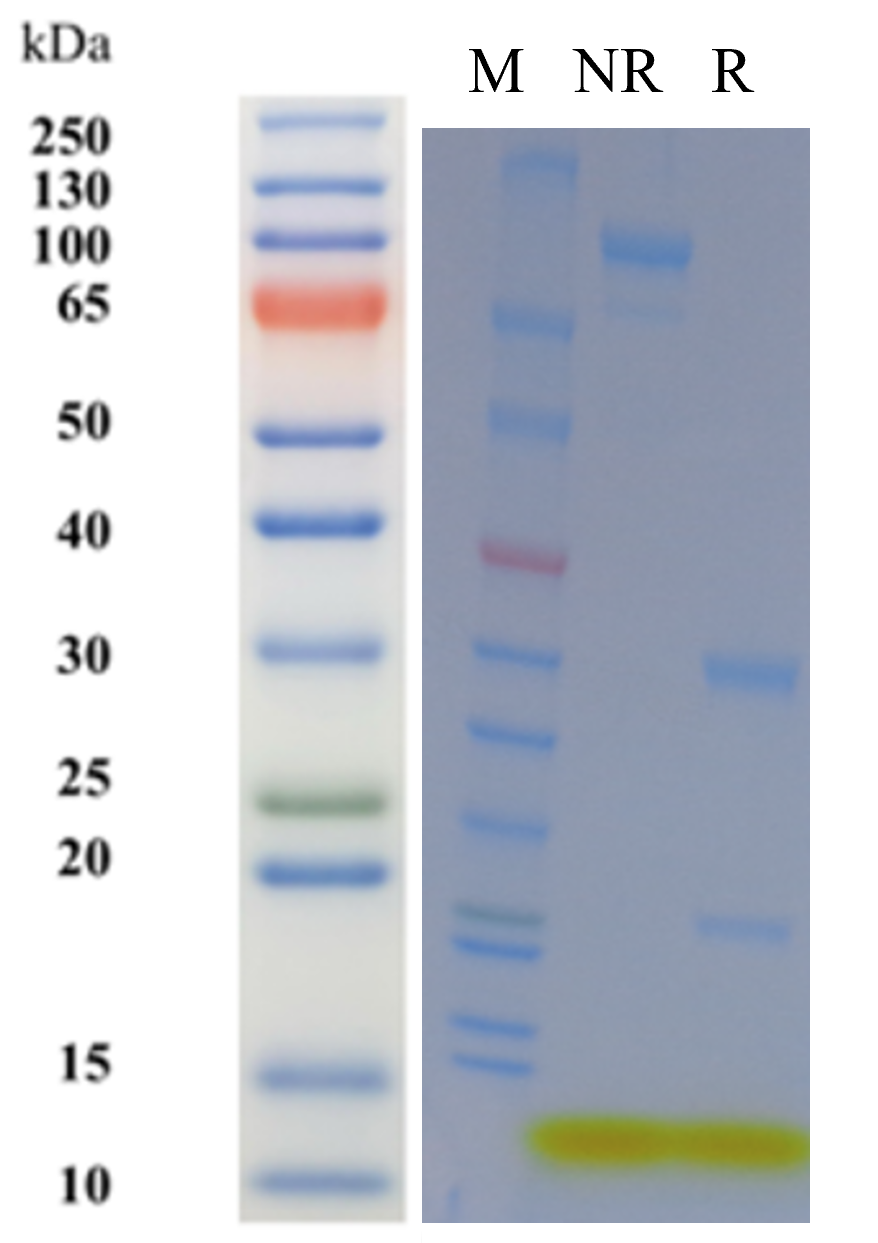
| Purity | > 95% as determined by SDS-PAGE |
| Endotoxin | < 1 EU/mg, determined by LAL gel clotting assay |
| Sterility | 0.22 μm Filtered |
| Target | CD30L |
| Clone | / |
| Alternative Names | CD153, CD30LG, Cd30l, Tnlg3a |
| Source/Isotype | Mouse IgG2a(L234A, L235A, P329G),Kappa |
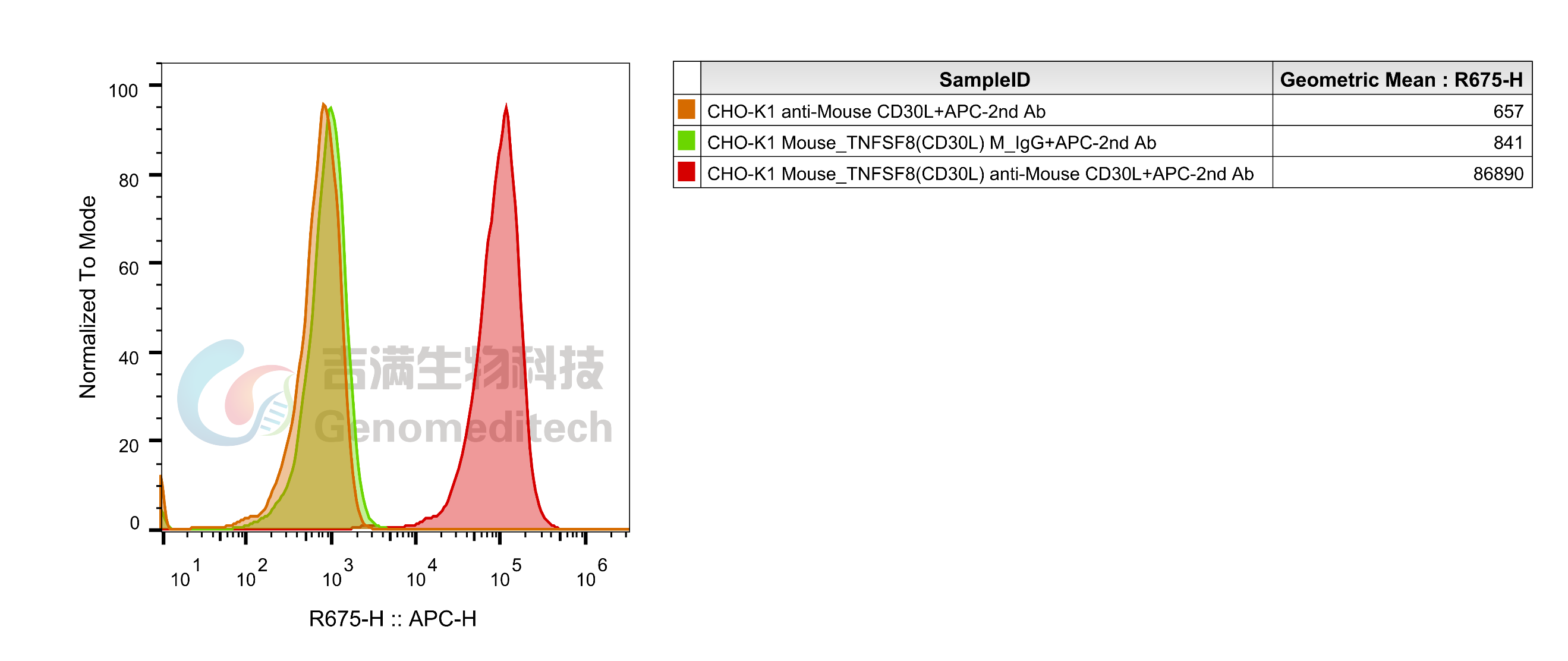
| Application | Flow Cytometry; Bioactivity-ELISA |
| Gene ID | 21949 (mouse) |
| Description | The CD30L gene, known as tumor necrosis factors ligand family member 8(TNFSF8) , is a key molecule in the immune system. It encodes a type II transmembrane glycoprotein, which belongs to the tumor necrosis factors (TNF) family and is mainly expressed on the surface of activated T cells, B cells, macrophages and other immune cells. CD30L, as a ligand of CD30 receptor, regulates the proliferation, differentiation and death of lymphocytes by binding to it, which is essential for the fine regulation of immune response. In addition, CD30L is also a marker of hematological malignancies such as Hodgkin's lymphoma, which is involved in the occurrence and development of tumors. Therefore, it has become an important target for immunotherapy and cancer research. |
| Formulation | Phosphate-buffered solution, pH 7.2-7.4. |
| Expression System | CHO |
| Aggregation | < 5% as determined by SEC-HPLC |
| Purity | > 95% as determined by SDS-PAGE |
| Endotoxin | < 1 EU/mg, determined by LAL gel clotting assay |
| Sterility | 0.22 μm Filtered |
| Target | CD30L |
| Clone | / |
| Alternative Names | CD153, CD30LG, Cd30l, Tnlg3a |
| Source/Isotype | Mouse IgG2a(L234A, L235A, P329G),Kappa |
| Application | Flow Cytometry; Bioactivity-ELISA |
| Gene ID | 21949 (mouse) |
| Description | The CD30L gene, known as tumor necrosis factors ligand family member 8(TNFSF8) , is a key molecule in the immune system. It encodes a type II transmembrane glycoprotein, which belongs to the tumor necrosis factors (TNF) family and is mainly expressed on the surface of activated T cells, B cells, macrophages and other immune cells. CD30L, as a ligand of CD30 receptor, regulates the proliferation, differentiation and death of lymphocytes by binding to it, which is essential for the fine regulation of immune response. In addition, CD30L is also a marker of hematological malignancies such as Hodgkin's lymphoma, which is involved in the occurrence and development of tumors. Therefore, it has become an important target for immunotherapy and cancer research. |
| Formulation | Phosphate-buffered solution, pH 7.2-7.4. |