Expression System CHO
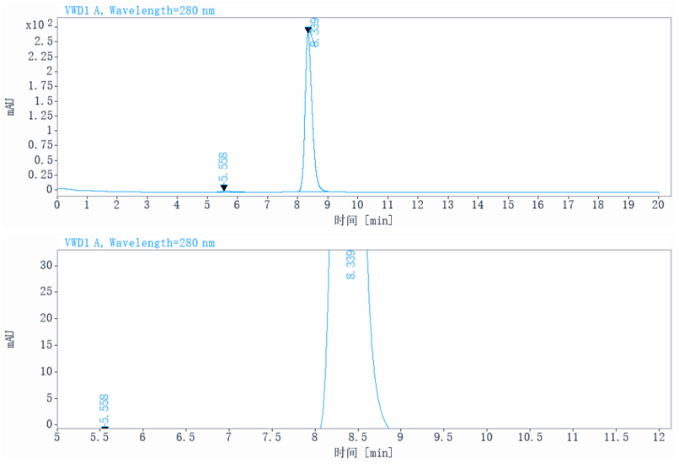
Aggregation < 5% as determined by SEC-HPLC
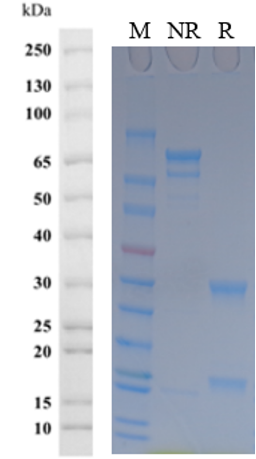
Purity > 95% as determined by SDS-PAGE
Specificity Detects IL13
Target IL13
Clone BAK209B11
Other Names IL-13, P600
Source/Isotype Monoclonal Mouse IgG2a kappa
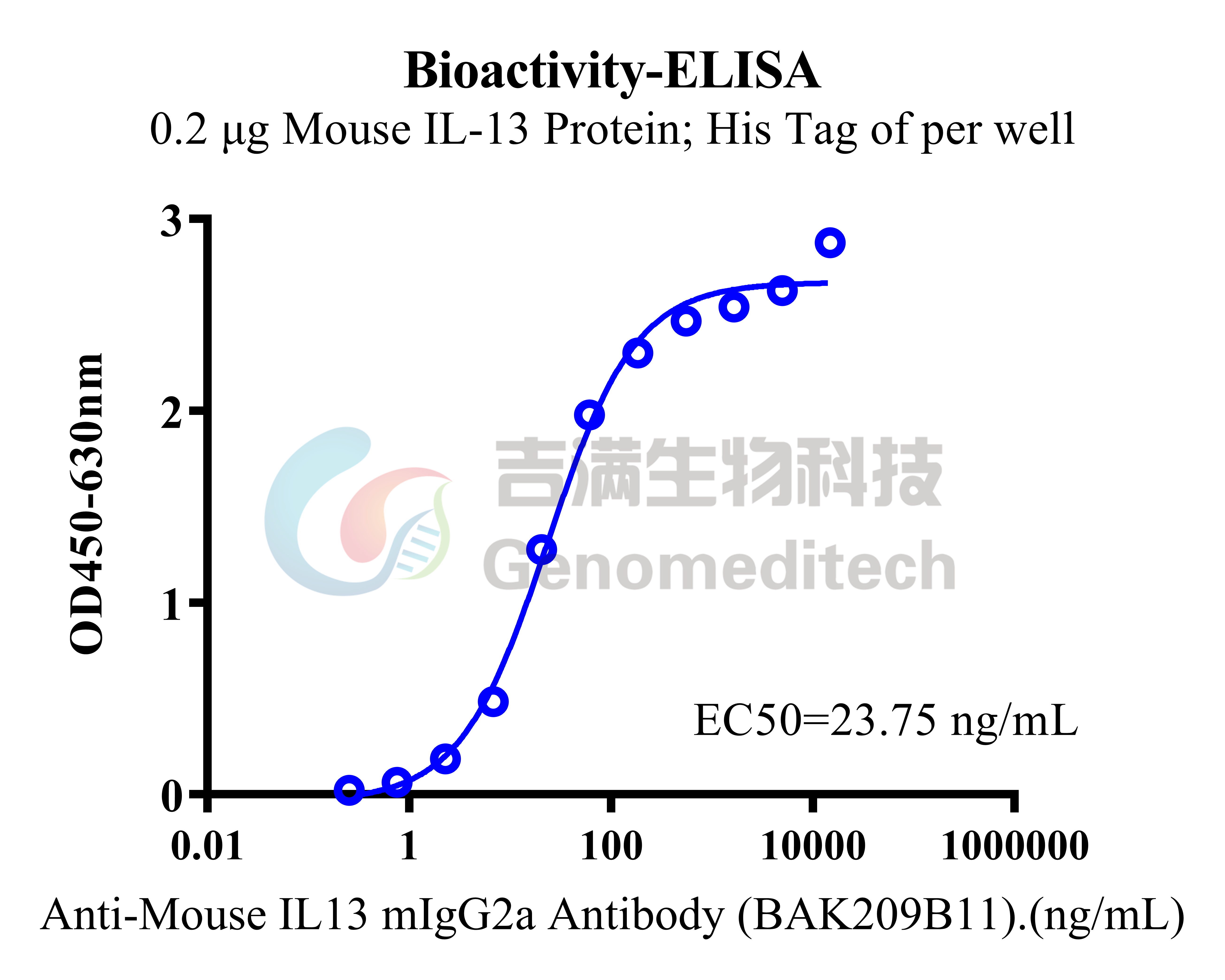
Application Bioactivity-ELISA
Gene ID 10090 (mouse)
Description IL-13 is a cytokine produced by Th2 cells, mast cells, eosinophil granulocyte, ilc2s, etc. . It mainly acts on epithelial tissues such as the airway, skin and intestine, and participates in the regulation of mucosal barrier, mucus secretion, inflammatory cell recruitment and excessive airway remodeling. Sharing a signaling pathway with IL-4(via the IL-4R α/IL-13R α1 complex) , plays a critical role in scenarios such as immune responses, allergies, and parasitic infections. The IL-13 gene is located in a region of a Upstream and downstream shared element, and its expression is regulated by transcription factors such as GATA3 and STAT6 in response to Th2 deflection signals. IL-13 signaling can be modulated by receptor availability, soluble baits, and genetic variants that affect receptor binding or expression. IL-13 activates signaling pathways such as JAK-STAT (especially Stat6) by binding to the complex of receptor IL-4R α with IL-13R α1/2, resulting in altered gene expression and amplification of inflammatory responses.
Formulation Phosphate-buffered solution, pH 7.2-7.4
Formulation < 1 EU/mg, determined by LAL gel clotting assay
Expression System CHO
Aggregation < 5% as determined by SEC-HPLC
Purity > 95% as determined by SDS-PAGE
Specificity Detects IL13
Target IL13
Clone BAK209B11
Other Names IL-13, P600
Source/Isotype Monoclonal Mouse IgG2a kappa
Application Bioactivity-ELISA
Gene ID 10090 (mouse)
Description IL-13 is a cytokine produced by Th2 cells, mast cells, eosinophil granulocyte, ilc2s, etc. . It mainly acts on epithelial tissues such as the airway, skin and intestine, and participates in the regulation of mucosal barrier, mucus secretion, inflammatory cell recruitment and excessive airway remodeling. Sharing a signaling pathway with IL-4(via the IL-4R α/IL-13R α1 complex) , plays a critical role in scenarios such as immune responses, allergies, and parasitic infections. The IL-13 gene is located in a region of a Upstream and downstream shared element, and its expression is regulated by transcription factors such as GATA3 and STAT6 in response to Th2 deflection signals. IL-13 signaling can be modulated by receptor availability, soluble baits, and genetic variants that affect receptor binding or expression. IL-13 activates signaling pathways such as JAK-STAT (especially Stat6) by binding to the complex of receptor IL-4R α with IL-13R α1/2, resulting in altered gene expression and amplification of inflammatory responses.
Formulation Phosphate-buffered solution, pH 7.2-7.4
Formulation < 1 EU/mg, determined by LAL gel clotting assay