













| Alternative Names | VSIG9, VSTM3 |
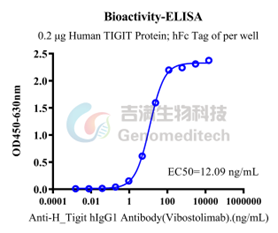
| Source | Human TIGIT Protein; hFc Tag (GM-88682RP) is expressed from human 293 cells (HEK-293). It contains AA Met 22 - Pro 141 (Accession # Q495A1-1). This protein carries a hFc tag at the C-terminus. |
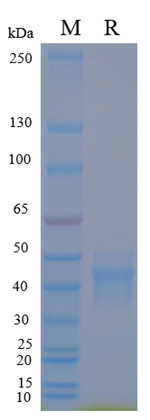
| Purity | > 90% as determined by SDS-PAGE |
| Endotoxin | < 1 EU/μg, determined by LAL gel clotting assay |
| Predicted Mol Mass | 39.0 kDa |
| Formulation | Supplied as a 0.2 μm filtered solution of PBS, pH7.2-7.4. |
| Description | TIGIT protein, full name T cell Immunoreceptor with Ig and ITIM domains, also known as WUCAM, Vstm3, or VSIG9, is an important immune checkpoint receptor and a member of the poliovirus receptor-like protein (PVR) family of immunoregulatory molecules. Currently, TIGIT-targeted therapeutic strategies have shown significant clinical promise, with multiple anti-TIGIT monoclonal antibodies (e.g., Tiragolumab, Vibostolimab, and Domvanalimab) being actively investigated in clinical trials as monotherapies or in combination with PD-1/PD-L1 inhibitors. In summary, TIGIT protein plays a pivotal role in tumor immune evasion and cancer progression, and holds great significance for understanding tumor immunology, identifying novel immune checkpoint targets, developing next-generation immunotherapies, and evaluating patient prognosis in the era of precision immuno-oncology. |
| Alternative Names | VSIG9, VSTM3 |
| Source | Human TIGIT Protein; hFc Tag (GM-88682RP) is expressed from human 293 cells (HEK-293). It contains AA Met 22 - Pro 141 (Accession # Q495A1-1). This protein carries a hFc tag at the C-terminus. |
| Purity | > 90% as determined by SDS-PAGE |
| Endotoxin | < 1 EU/μg, determined by LAL gel clotting assay |
| Predicted Mol Mass | 39.0 kDa |
| Formulation | Supplied as a 0.2 μm filtered solution of PBS, pH7.2-7.4. |
| Description | TIGIT protein, full name T cell Immunoreceptor with Ig and ITIM domains, also known as WUCAM, Vstm3, or VSIG9, is an important immune checkpoint receptor and a member of the poliovirus receptor-like protein (PVR) family of immunoregulatory molecules. Currently, TIGIT-targeted therapeutic strategies have shown significant clinical promise, with multiple anti-TIGIT monoclonal antibodies (e.g., Tiragolumab, Vibostolimab, and Domvanalimab) being actively investigated in clinical trials as monotherapies or in combination with PD-1/PD-L1 inhibitors. In summary, TIGIT protein plays a pivotal role in tumor immune evasion and cancer progression, and holds great significance for understanding tumor immunology, identifying novel immune checkpoint targets, developing next-generation immunotherapies, and evaluating patient prognosis in the era of precision immuno-oncology. |