













| Alternative Names | M6P1, 5T4AG, WAIF1, 5T4 oncofetal antigen, Trophoblast glycoprotein, 5T4 oncofetal trophoblast glycoprotein |
| Source | Human TPBG(5T4) Protein; His Tag (GM-88571RP) is expressed from human 293 cells (HEK-293). It contains AA Ser 32 - Ser 355(Accession # Q13641-1). This protein carries a His tag at the C-terminus. |
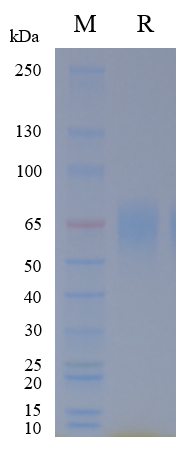
| Purity | > 95% as determined by SDS-PAGE |
| Endotoxin | < 1 EU/μg, determined by LAL gel clotting assay |
| Predicted Mol Mass | 36.1 kDa |
| Formulation | Supplied as a 0.2 μm filtered solution of PBS, pH7.2-7.4. |
| Description | TPBG (5T4) protein is a transmembrane glycoprotein that belongs to the leucine-rich repeat (LRR) family. It is encoded by the TPBG gene and is a protein associated with embryonic development and tumor progression. TPBG protein was initially identified in trophoblast cells of the placenta and later detected in various cancer tissues including colorectal, gastric, breast, and ovarian cancers. TPBG protein regulates cell migration, epithelial-mesenchymal transition (EMT), and immune modulation by interacting with components of the Wnt/β-catenin signaling pathway and the CXCR4 receptor. Trophoblast cells and cancer cells share important characteristics in tissue invasion, immune evasion, and metastasis, making them key players in embryonic development and malignant transformation. Research indicates that TPBG protein plays a significant role in promoting tumor cell invasion, enhancing metastatic potential, and modulating tumor immune microenvironment. Additionally, the expression of TPBG protein is associated with poor prognosis in multiple malignancies, as well as resistance to conventional therapies, making it a potential target for cancer immunotherapy and targeted therapy. |
| Alternative Names | M6P1, 5T4AG, WAIF1, 5T4 oncofetal antigen, Trophoblast glycoprotein, 5T4 oncofetal trophoblast glycoprotein |
| Source | Human TPBG(5T4) Protein; His Tag (GM-88571RP) is expressed from human 293 cells (HEK-293). It contains AA Ser 32 - Ser 355(Accession # Q13641-1). This protein carries a His tag at the C-terminus. |
| Purity | > 95% as determined by SDS-PAGE |
| Endotoxin | < 1 EU/μg, determined by LAL gel clotting assay |
| Predicted Mol Mass | 36.1 kDa |
| Formulation | Supplied as a 0.2 μm filtered solution of PBS, pH7.2-7.4. |
| Description | TPBG (5T4) protein is a transmembrane glycoprotein that belongs to the leucine-rich repeat (LRR) family. It is encoded by the TPBG gene and is a protein associated with embryonic development and tumor progression. TPBG protein was initially identified in trophoblast cells of the placenta and later detected in various cancer tissues including colorectal, gastric, breast, and ovarian cancers. TPBG protein regulates cell migration, epithelial-mesenchymal transition (EMT), and immune modulation by interacting with components of the Wnt/β-catenin signaling pathway and the CXCR4 receptor. Trophoblast cells and cancer cells share important characteristics in tissue invasion, immune evasion, and metastasis, making them key players in embryonic development and malignant transformation. Research indicates that TPBG protein plays a significant role in promoting tumor cell invasion, enhancing metastatic potential, and modulating tumor immune microenvironment. Additionally, the expression of TPBG protein is associated with poor prognosis in multiple malignancies, as well as resistance to conventional therapies, making it a potential target for cancer immunotherapy and targeted therapy. |