




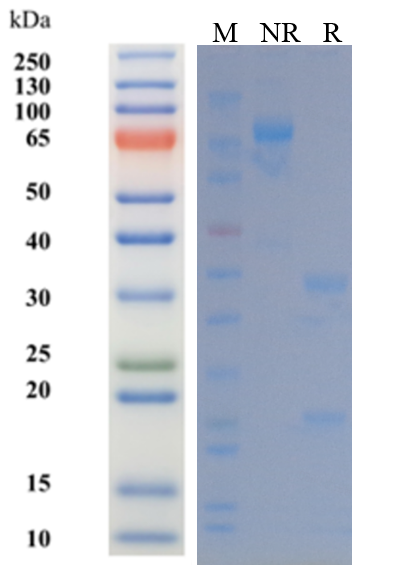
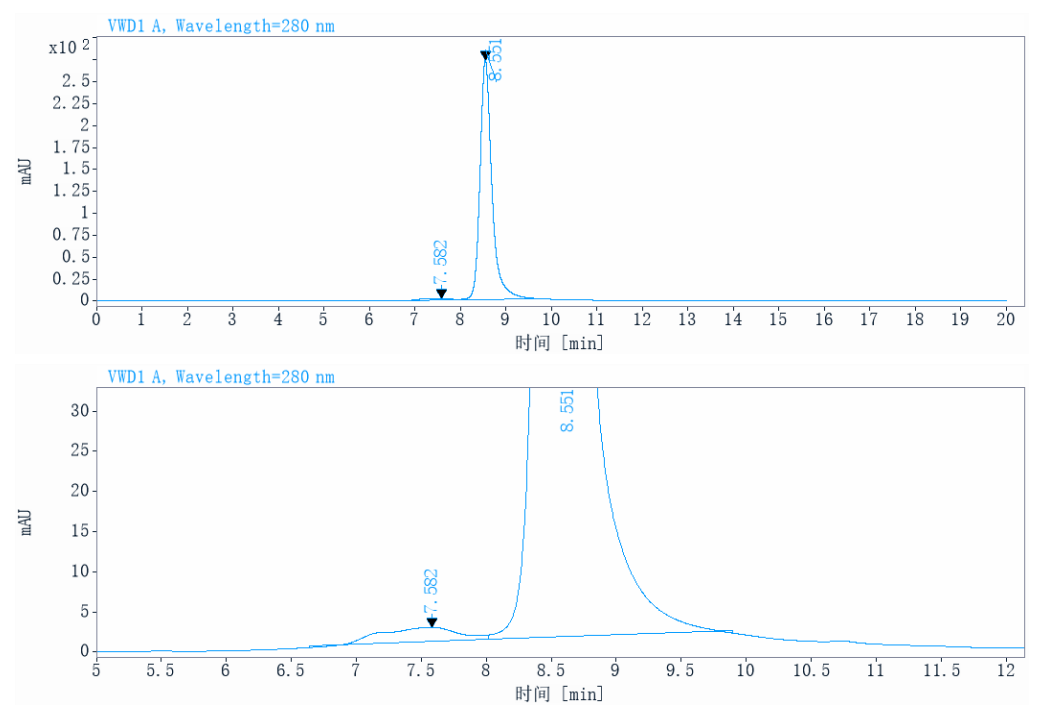




| Species Reactivity | Human |
| Clone | h5C7 |
| Source/Isotype | Human IgG1, Kappa |
| Application | / |
| Specificity | Detects CLEC5A |
| Gene | CLEC5A |
| Other Names | CLEC5A, CLECSF5, member A, MDL1 |
| Gene ID | 23601 (Human) |
| Background | The research value of CLEC5A lies in its role as a central "inflammatory hub" and a key pattern recognition receptor on the surface of myeloid immune cells. Upon recognizing viral or bacterial components, CLEC5A over-activates macrophages and neutrophils, driving cytokine storms, acute lung injury, and aberrant NETosis formation, thereby serving as a critical nexus linking pathogen infection to lethal inflammatory cascades. Blocking this pathway not only significantly reduces mortality in severe infections such as dengue, influenza, and sepsis but also improves cognitive function in Alzheimer's disease by quelling neuroinflammation and inhibits bone erosion in autoimmune disorders. Therefore, targeting CLEC5A provides a common upstream therapeutic target for intervening in various refractory inflammatory diseases and holds substantial promise for clinical translation. |
| Storage | Store at 2-8℃ short term (1-2 weeks).Store at ≤ -20℃ long term. Avoid repeated freeze-thaw. |
| Formulation | Supplied as a 0.2 μm filtered solution of PBS, pH7.2-7.4. |
| Endotoxin | < 1 EU/mg, determined by LAL gel clotting assay |
| Species Reactivity | Human |
| Clone | h5C7 |
| Source/Isotype | Human IgG1, Kappa |
| Application | / |
| Specificity | Detects CLEC5A |
| Gene | CLEC5A |
| Other Names | CLEC5A, CLECSF5, member A, MDL1 |
| Gene ID | 23601 (Human) |
| Background | The research value of CLEC5A lies in its role as a central "inflammatory hub" and a key pattern recognition receptor on the surface of myeloid immune cells. Upon recognizing viral or bacterial components, CLEC5A over-activates macrophages and neutrophils, driving cytokine storms, acute lung injury, and aberrant NETosis formation, thereby serving as a critical nexus linking pathogen infection to lethal inflammatory cascades. Blocking this pathway not only significantly reduces mortality in severe infections such as dengue, influenza, and sepsis but also improves cognitive function in Alzheimer's disease by quelling neuroinflammation and inhibits bone erosion in autoimmune disorders. Therefore, targeting CLEC5A provides a common upstream therapeutic target for intervening in various refractory inflammatory diseases and holds substantial promise for clinical translation. |
| Storage | Store at 2-8℃ short term (1-2 weeks).Store at ≤ -20℃ long term. Avoid repeated freeze-thaw. |
| Formulation | Supplied as a 0.2 μm filtered solution of PBS, pH7.2-7.4. |
| Endotoxin | < 1 EU/mg, determined by LAL gel clotting assay |