














| Alternative Names | IL-5, TRF, IL5, Interleukin-5 |
| Source | Human IL-5 Protein; His Tag (GM-88539RP) is expressed from human 293 cells (HEK-293). It contains AA Ile 20 - Ser 134 (Accession # P05113-1). This protein carries a His tag at the N-terminus. |
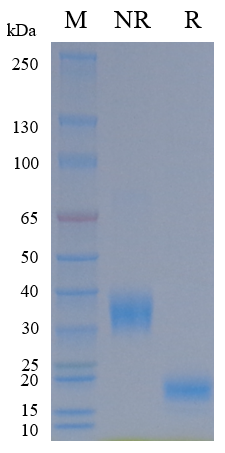
| Purity | > 95% as determined by SDS-PAGE |
| Endotoxin | < 1 EU/μg, determined by LAL gel clotting assay |
| Predicted Mol Mass | 14.0 KDa |
| Formulation | Supplied as a 0.2 μm filtered solution of PBS, pH7.2-7.4. |
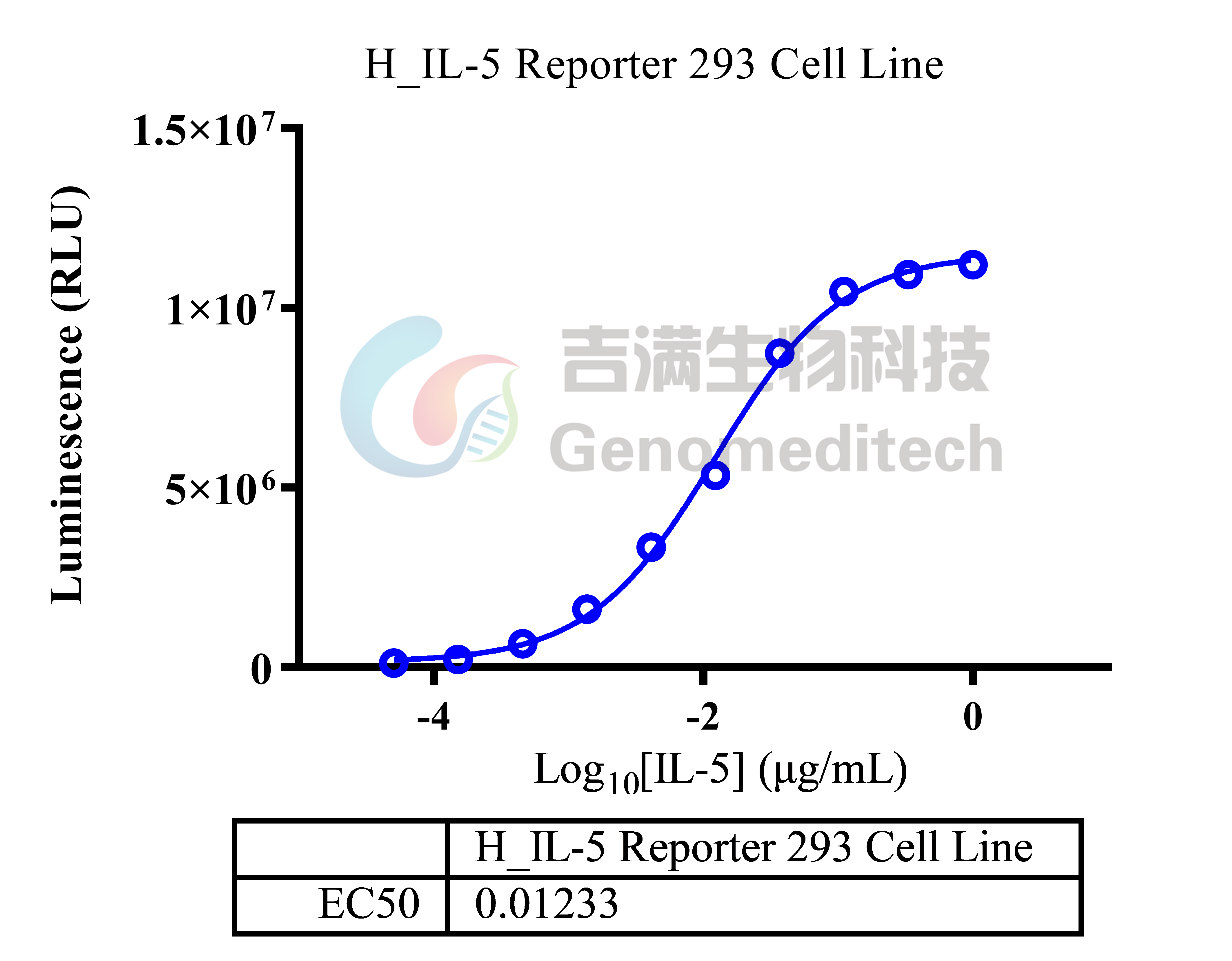
| Description | Interleukin-5 (IL-5) is a secreted cytokine primarily produced by Th2 cells, group 2 innate lymphoid cells, and mast cells. It plays a central role in the growth, differentiation, and activation of eosinophils, contributing to eosinophil-mediated immune responses in allergies and parasitic infections. IL-5 signals through the IL-5 receptor, a heteromeric complex composed of the IL-5 receptor alpha chain (IL-5Rα) and the common beta chain (βc, also known as CD131) shared with other cytokine receptors. Engagement of this receptor complex promotes eosinophil survival and function, and aberrant IL-5 signaling has been linked to eosinophilic disorders. Upon IL-5 binding, the IL-5Rα/βc receptor complex activates associated kinases, leading to phosphorylation of downstream signaling molecules such as JAK2 and STAT5, which drive transcription of genes involved in eosinophil proliferation, maturation, and survival. The pathway also engages MAPK and PI3K/AKT signaling branches, contributing to cellular growth and anti-apoptotic signals. Dysregulation of IL-5 signaling can enhance eosinophilic inflammation in diseases like asthma and hypereosinophilic syndromes. |
| Alternative Names | IL-5, TRF, IL5, Interleukin-5 |
| Source | Human IL-5 Protein; His Tag (GM-88539RP) is expressed from human 293 cells (HEK-293). It contains AA Ile 20 - Ser 134 (Accession # P05113-1). This protein carries a His tag at the N-terminus. |
| Purity | > 95% as determined by SDS-PAGE |
| Endotoxin | < 1 EU/μg, determined by LAL gel clotting assay |
| Predicted Mol Mass | 14.0 KDa |
| Formulation | Supplied as a 0.2 μm filtered solution of PBS, pH7.2-7.4. |
| Description | Interleukin-5 (IL-5) is a secreted cytokine primarily produced by Th2 cells, group 2 innate lymphoid cells, and mast cells. It plays a central role in the growth, differentiation, and activation of eosinophils, contributing to eosinophil-mediated immune responses in allergies and parasitic infections. IL-5 signals through the IL-5 receptor, a heteromeric complex composed of the IL-5 receptor alpha chain (IL-5Rα) and the common beta chain (βc, also known as CD131) shared with other cytokine receptors. Engagement of this receptor complex promotes eosinophil survival and function, and aberrant IL-5 signaling has been linked to eosinophilic disorders. Upon IL-5 binding, the IL-5Rα/βc receptor complex activates associated kinases, leading to phosphorylation of downstream signaling molecules such as JAK2 and STAT5, which drive transcription of genes involved in eosinophil proliferation, maturation, and survival. The pathway also engages MAPK and PI3K/AKT signaling branches, contributing to cellular growth and anti-apoptotic signals. Dysregulation of IL-5 signaling can enhance eosinophilic inflammation in diseases like asthma and hypereosinophilic syndromes. |