
















| Alternative Names | Thymic stromal lymphopoietin |
| Source | Human TSLP Protein; His Tag (GM-87654RP) is expressed from human 293 cells (HEK-293). It contains AA Tyr 29 - Gln 159 (Accession # Q969D9-1). This protein carries a His tag at the C-terminus. |
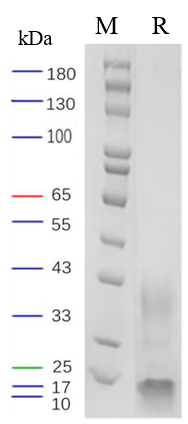
| Purity | > 90% as determined by SDS-PAGE |
| Endotoxin | < 1 EU/μg, determined by LAL gel clotting assay |
| Predicted Mol Mass | 15.1 KDa |
| Formulation | Supplied as a 0.2 μm filtered solution of PBS, pH7.4. |
| Description | TSLP protein (Thymic stromal lymphopoietin) is a cytokine protein mainly produced by epithelial cells, immune cells, and other cells. It plays an important role in immune regulation and inflammation processes. TSLP protein has various functions in the immune system. It can promote the maturation and activation of dendritic cells, thereby triggering immune responses of T cells and B cells. Additionally, TSLP protein can also affect the activity of macrophages, mast cells, and other immune cells, regulating inflammatory responses and immune responses. TSLP protein plays an important role in allergic diseases and autoimmune diseases. It is considered an important regulatory factor in allergic diseases (such as asthma, eczema) and autoimmune diseases (such as rheumatoid arthritis, inflammatory bowel disease). Overactivation of TSLP is often closely related to the occurrence and development of these diseases. |
| Alternative Names | Thymic stromal lymphopoietin |
| Source | Human TSLP Protein; His Tag (GM-87654RP) is expressed from human 293 cells (HEK-293). It contains AA Tyr 29 - Gln 159 (Accession # Q969D9-1). This protein carries a His tag at the C-terminus. |
| Purity | > 90% as determined by SDS-PAGE |
| Endotoxin | < 1 EU/μg, determined by LAL gel clotting assay |
| Predicted Mol Mass | 15.1 KDa |
| Formulation | Supplied as a 0.2 μm filtered solution of PBS, pH7.4. |
| Description | TSLP protein (Thymic stromal lymphopoietin) is a cytokine protein mainly produced by epithelial cells, immune cells, and other cells. It plays an important role in immune regulation and inflammation processes. TSLP protein has various functions in the immune system. It can promote the maturation and activation of dendritic cells, thereby triggering immune responses of T cells and B cells. Additionally, TSLP protein can also affect the activity of macrophages, mast cells, and other immune cells, regulating inflammatory responses and immune responses. TSLP protein plays an important role in allergic diseases and autoimmune diseases. It is considered an important regulatory factor in allergic diseases (such as asthma, eczema) and autoimmune diseases (such as rheumatoid arthritis, inflammatory bowel disease). Overactivation of TSLP is often closely related to the occurrence and development of these diseases. |