









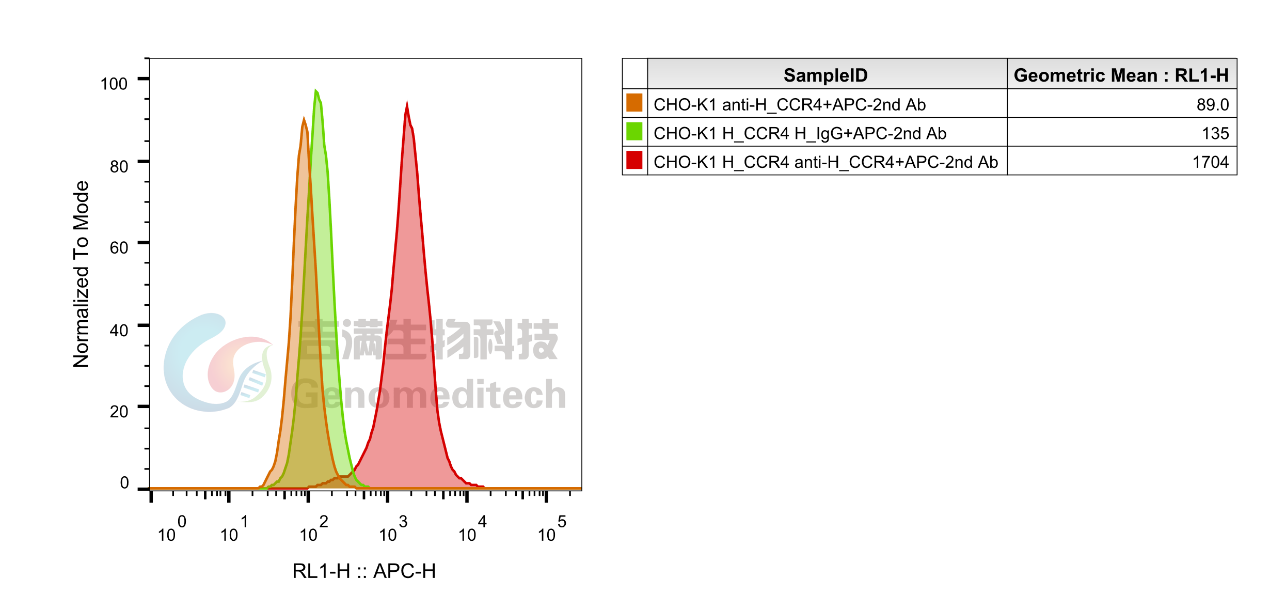
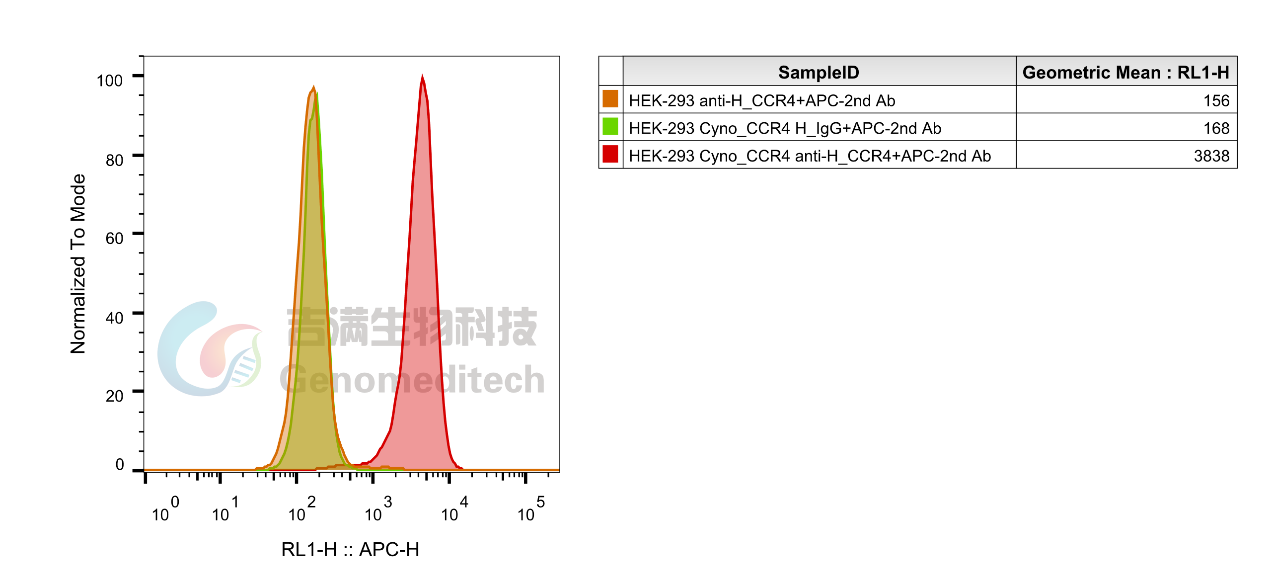




| Species Reactivity | Human; Cynomolgus |
| Clone | Mogamulizumab |
| Source/Isotype | Monoclonal human IgG1 |
| Application | Flow cytometry |
| Specificity | Detects CCR4 |
| Gene | CCR4 |
| Other Names | CC-CKR-4, CD194, CKR4, CMKBR4, ChemR13, HGCN:14099, K5-5 |
| Gene ID | P51679 (human); G7NYB7-1 (Cynomolgus) |
| Background | CCR4 is a G protein-linked seven transmembrane domain chemokine receptor for the CC chemokine - MIP-1, RANTES, TARC and MCP-1. Chemokines are a group of small polypeptide, structurally related molecules that regulate cell trafficking of various types of leukocytes. The chemokines also play fundamental roles in the development, homeostasis, and function of the immune system, and they have effects on cells of the central nervous system as well as on endothelial cells involved in angiogenesis or angiostasis. CCR4 is often expressed on leukemic cells in cutaneous T-cell lymphoma (CTCL). |
| Storage | Store at 2-8℃ short term (1-2 weeks).Store at ≤ -20℃ long term. Avoid repeated freeze-thaw. |
| Formulation | Phosphate-buffered solution, pH 7.2. |
| Endotoxin | < 1 EU/mg, determined by LAL gel clotting assay |
| Species Reactivity | Human; Cynomolgus |
| Clone | Mogamulizumab |
| Source/Isotype | Monoclonal human IgG1 |
| Application | Flow cytometry |
| Specificity | Detects CCR4 |
| Gene | CCR4 |
| Other Names | CC-CKR-4, CD194, CKR4, CMKBR4, ChemR13, HGCN:14099, K5-5 |
| Gene ID | P51679 (human); G7NYB7-1 (Cynomolgus) |
| Background | CCR4 is a G protein-linked seven transmembrane domain chemokine receptor for the CC chemokine - MIP-1, RANTES, TARC and MCP-1. Chemokines are a group of small polypeptide, structurally related molecules that regulate cell trafficking of various types of leukocytes. The chemokines also play fundamental roles in the development, homeostasis, and function of the immune system, and they have effects on cells of the central nervous system as well as on endothelial cells involved in angiogenesis or angiostasis. CCR4 is often expressed on leukemic cells in cutaneous T-cell lymphoma (CTCL). |
| Storage | Store at 2-8℃ short term (1-2 weeks).Store at ≤ -20℃ long term. Avoid repeated freeze-thaw. |
| Formulation | Phosphate-buffered solution, pH 7.2. |
| Endotoxin | < 1 EU/mg, determined by LAL gel clotting assay |