







产品编号:GM-87782MAB
产品名称:Anti-PD-L1 hIgG1 Reference Antibody (Avebio)
目录价:询价






产品编号:GM-87782MAB
产品名称:Anti-PD-L1 hIgG1 Reference Antibody (Avebio)
目录价:询价
GM-87782MAB-1mg / 1 mg
GM-87782MAB-5mg / 5 mg
GM-87782MAB-25mg / 25 mg
GM-87782MAB-50mg / 50 mg
GM-87782MAB-100mg / 100 mg
Expression System | CHO |
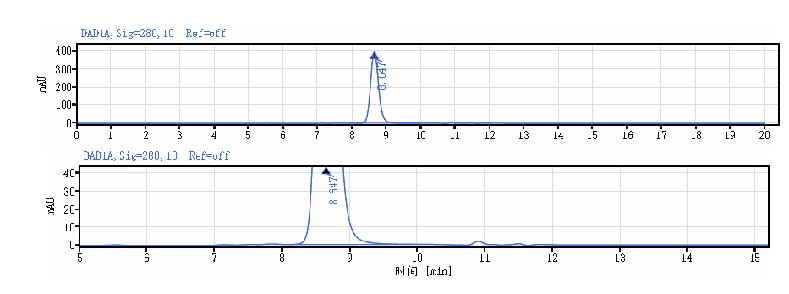
Aggregation | < 5% as determined by SEC-HPLC |
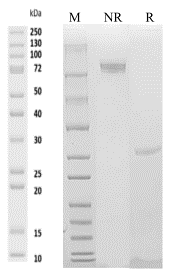
Purity | > 95% as determined by SDS-PAGE |
Endotoxin | < 1 EU/mg, determined by LAL gel clotting assay |
Sterility | 0.2 μm Filtered |
Target | PD-L1 |
Clone | Avelumab |
Alternative Names | B7-H, B7H1, PDL1, PDCD1L1, PDCD1LG1, CD274, hPD-L1 |
Source/Isotype | Human IgG1 (KDEL), lambda |
Application | Bioactivity-ELISA |
Description | The programmed cell death 1 protein (PD-1, PDCD1, CD279) is a member of the CD28 family of immunoreceptors that regulate T cell activation and immune responses. The PD-1 protein contains an extracellular Ig V domain, a transmembrane domain, and a cytoplasmic tail that includes an immunoreceptor tyrosine-based inhibitory motif (ITIM) and an immunoreceptor tyrosine-based switch motif (ITSM). PD-1 is activated by the cell surface ligands PD-L1 and PD-L2. Upon activation, PD-1 ITIM and ITSM phosphorylation leads to the recruitment of the protein tyrosine phosphatases SHP-1 and SHP-2, which suppress TCR signaling. In addition to activated T-cells, PD-1 is expressed in activated B-cells and monocytes, although its function in these cell types has not been fully characterized. The PD-1 pathway plays an important role in immune tolerance; however, research studies show that cancer cells often adopt this pathway to escape immune surveillance. Consequently, blockade of PD-1 and its ligands is proving to be a sound strategy for neoplastic intervention. |
Formulation | phosphate-buffered solution, pH 7.2-7.4. |



产品编号:GM-87782MAB
产品名称:Anti-PD-L1 hIgG1 Reference Antibody (Avebio)
目录价:询价
产品编号:GM-87782MAB
产品名称:Anti-PD-L1 hIgG1 Reference Antibody (Avebio)
目录价:询价
GM-87782MAB-1mg / 1 mg
GM-87782MAB-5mg / 5 mg
GM-87782MAB-25mg / 25 mg
GM-87782MAB-50mg / 50 mg
GM-87782MAB-100mg / 100 mg
GM-87782MAB-1mg / 1 mg
GM-87782MAB-5mg / 5 mg
GM-87782MAB-25mg / 25 mg
GM-87782MAB-50mg / 50 mg
GM-87782MAB-100mg / 100 mg
Expression System | CHO |
Aggregation | < 5% as determined by SEC-HPLC |
Purity | > 95% as determined by SDS-PAGE |
Endotoxin | < 1 EU/mg, determined by LAL gel clotting assay |
Sterility | 0.2 μm Filtered |
Target | PD-L1 |
Clone | Avelumab |
Alternative Names | B7-H, B7H1, PDL1, PDCD1L1, PDCD1LG1, CD274, hPD-L1 |
Source/Isotype | Human IgG1 (KDEL), lambda |
Application | Bioactivity-ELISA |
Description | The programmed cell death 1 protein (PD-1, PDCD1, CD279) is a member of the CD28 family of immunoreceptors that regulate T cell activation and immune responses. The PD-1 protein contains an extracellular Ig V domain, a transmembrane domain, and a cytoplasmic tail that includes an immunoreceptor tyrosine-based inhibitory motif (ITIM) and an immunoreceptor tyrosine-based switch motif (ITSM). PD-1 is activated by the cell surface ligands PD-L1 and PD-L2. Upon activation, PD-1 ITIM and ITSM phosphorylation leads to the recruitment of the protein tyrosine phosphatases SHP-1 and SHP-2, which suppress TCR signaling. In addition to activated T-cells, PD-1 is expressed in activated B-cells and monocytes, although its function in these cell types has not been fully characterized. The PD-1 pathway plays an important role in immune tolerance; however, research studies show that cancer cells often adopt this pathway to escape immune surveillance. Consequently, blockade of PD-1 and its ligands is proving to be a sound strategy for neoplastic intervention. |
Formulation | phosphate-buffered solution, pH 7.2-7.4. |
Expression System | CHO |
Aggregation | < 5% as determined by SEC-HPLC |
Purity | > 95% as determined by SDS-PAGE |
Endotoxin | < 1 EU/mg, determined by LAL gel clotting assay |
Sterility | 0.2 μm Filtered |
Target | PD-L1 |
Clone | Avelumab |
Alternative Names | B7-H, B7H1, PDL1, PDCD1L1, PDCD1LG1, CD274, hPD-L1 |
Source/Isotype | Human IgG1 (KDEL), lambda |
Application | Bioactivity-ELISA |
Description | The programmed cell death 1 protein (PD-1, PDCD1, CD279) is a member of the CD28 family of immunoreceptors that regulate T cell activation and immune responses. The PD-1 protein contains an extracellular Ig V domain, a transmembrane domain, and a cytoplasmic tail that includes an immunoreceptor tyrosine-based inhibitory motif (ITIM) and an immunoreceptor tyrosine-based switch motif (ITSM). PD-1 is activated by the cell surface ligands PD-L1 and PD-L2. Upon activation, PD-1 ITIM and ITSM phosphorylation leads to the recruitment of the protein tyrosine phosphatases SHP-1 and SHP-2, which suppress TCR signaling. In addition to activated T-cells, PD-1 is expressed in activated B-cells and monocytes, although its function in these cell types has not been fully characterized. The PD-1 pathway plays an important role in immune tolerance; however, research studies show that cancer cells often adopt this pathway to escape immune surveillance. Consequently, blockade of PD-1 and its ligands is proving to be a sound strategy for neoplastic intervention. |
Formulation | phosphate-buffered solution, pH 7.2-7.4. |