













| Alternative Names | KDR, CD309, FLK1, VEGF R2 |
| Source | Cynomolgus VEGFR2 Protein; His Tag (GM-88978RP) is expressed from human 293 cells (HEK-293). It contains AA Ala 20 - Glu 764 (Accession # F7E313).This protein carries a His tag at the C-terminus. |
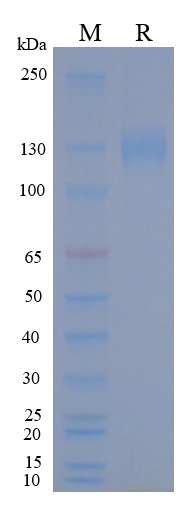
| Purity | > 90% as determined by SDS-PAGE |
| Endotoxin | < 1 EU/μg, determined by LAL gel clotting assay |
| Predicted Mol Mass | 84.1 kDa |
| Formulation | Supplied as a 0.2 μm filtered solution of PBS, pH 7.2–7.4. |
| Description | VEGFR2 (Vascular Endothelial Growth Factor Receptor 2) is a key tyrosine kinase receptor in vascular endothelial cells. It binds to VEGF, activating pathways like PI3K/AKT and MAPK to regulate angiogenesis, vascular permeability, cell proliferation, and migration. VEGFR2 is crucial for embryonic development and tumor growth, with abnormal expression linked to tumor angiogenesis and invasion, making it a key anti-angiogenesis target. Composed of extracellular, transmembrane, and intracellular domains, VEGFR2 shows abnormal expression in conditions like cancer and ocular diseases. Targeted inhibitors, such as tyrosine kinase inhibitors and antibody drugs, are widely used in clinical therapies, marking VEGFR2 as a focus for cancer and anti-angiogenesis drug research. |