













| Alternative Names | FLT,FLT1 |
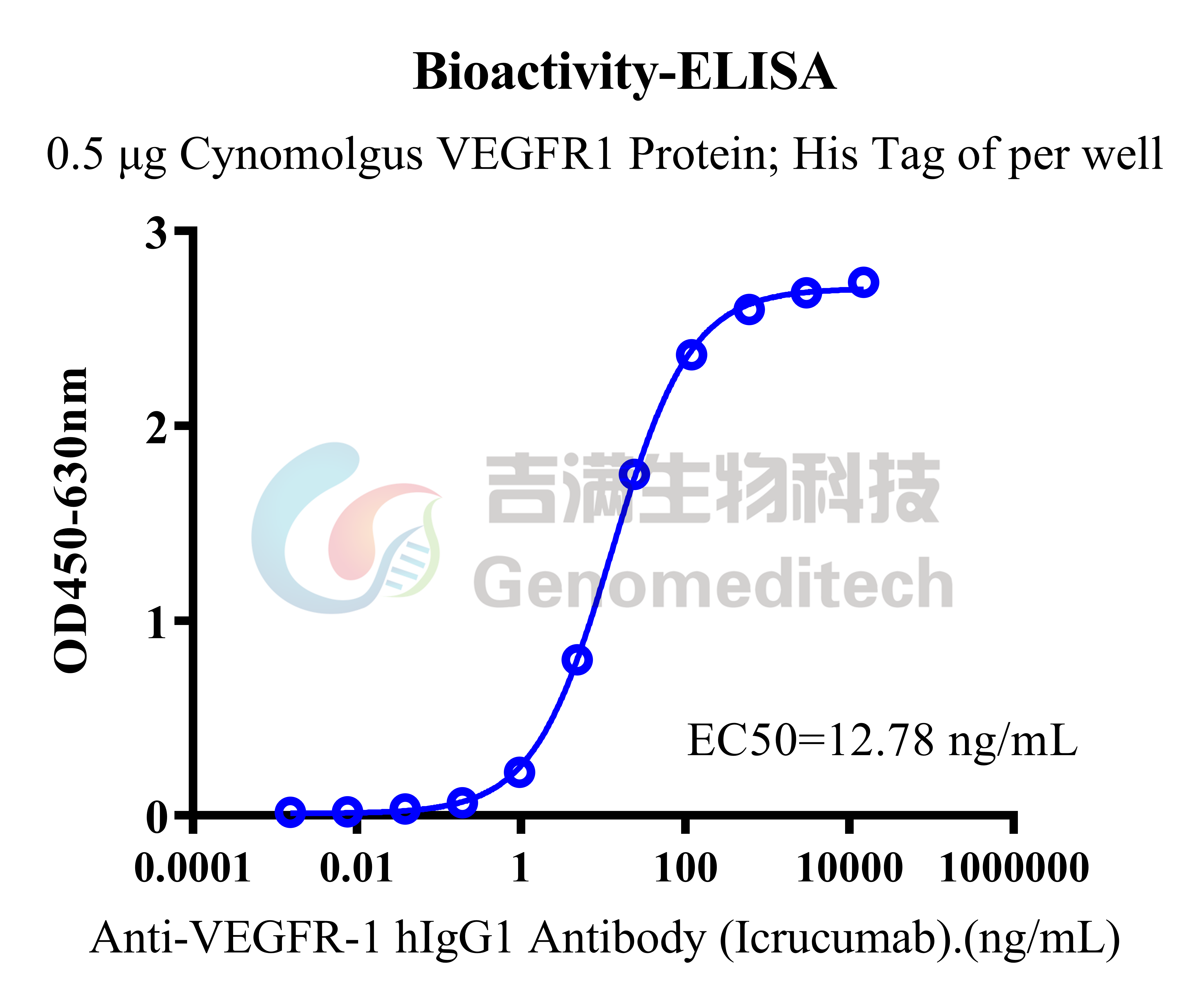
| Source | Cynomolgus VEGFR1 Protein; His Tag (GM-88727RP) is expressed from human 293 cells (HEK-293). It contains AA Ser 27 - Asn 756 (Accession # A0A2K5VAF2). |
| This protein carries a His tag at the C-terminus. | |
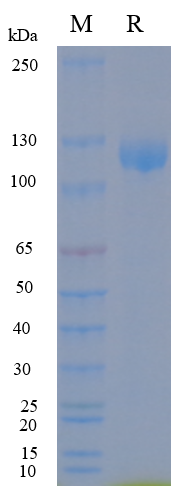
| Purity | > 90% as determined by SDS-PAGE |
| Endotoxin | < 1 EU/μg, determined by LAL gel clotting assay |
| Predicted Mol Mass | 82.8 kDa |
| Formulation | Supplied as a 0.2 μm filtered solution of PBS, pH 7.2–7.4. |
| Description | Vascular endothelial growth factor receptor 1 (VEGFR1), encoded by the FLT1 gene, is a receptor tyrosine kinase belonging to the VEGF receptor family. It binds VEGF-A, VEGF-B and placental growth factor (PlGF) with high affinity through its extracellular immunoglobulin-like domains, and plays an essential role in embryonic vascular development, endothelial cell survival and migration, and both physiological and pathological angiogenesis. Notably, VEGFR1 possesses relatively weak intrinsic kinase activity and can sequester VEGF ligands away from VEGFR2, thereby acting as a negative regulator of VEGF signaling. Alternative splicing generates a soluble isoform (sFlt1), which lacks the transmembrane and kinase domains and functions as a secreted decoy receptor; its dysregulated expression has been implicated in preeclampsia and tumor angiogenesis. |