


Human ROR2 Protein; His Tag
货号
GM-88579RP
规格
100 μg
1 mg
立即询价
基本信息
数据展示
相关产品
基本信息
Alternative Names NTRKR2
Source Human ROR2 Protein; His Tag (GM-88579RP) is expressed from human 293 cells (HEK-293). It contains AA Glu 34 - Gly 403 (Accession # A1L4F5-1).
This protein carries a His tag at the C-terminus.
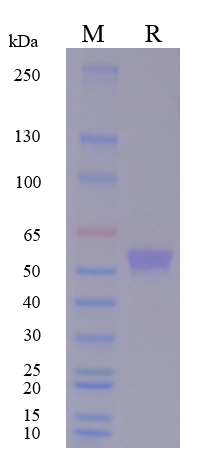
Purity > 95% as determined by SDS-PAGE
Endotoxin < 1 EU/μg, determined by LAL gel clotting assay
Predicted Mol Mass 42.2 kDa
Formulation Supplied as a 0.2 μm filtered solution of PBS, pH7.2-7.4.
Description ROR2 protein is a receptor tyrosine kinase that belongs to the ROR family (related to the tropomyosin receptor kinase family). It is encoded by the ROR2 gene and is a protein associated with skeletal development and tissue morphogenesis. ROR2 protein was initially identified in fetal tissues and later detected in various cell types including osteoblasts, chondrocytes, and multiple cancer cells. ROR2 protein regulates cell polarity, migration, and differentiation by binding to its ligand Wnt5a and activating non-canonical Wnt signaling pathways, such as the planar cell polarity (PCP) pathway and the Wnt/Ca²⁺ pathway. Osteoblasts and chondrocytes are important types of mesenchymal cells with critical functions in bone formation, cartilage development, and tissue patterning, making them central members of the skeletal system. Research indicates that ROR2 protein plays a significant role in promoting embryonic morphogenesis, enhancing cell movement, and modulating tissue organization. Additionally, the expression of ROR2 protein is associated with skeletal disorders such as Robinow syndrome, as well as tumor progression, metastasis, and immune modulation in various cancers, making it a potential target for regenerative medicine and cancer immunotherapy.
Alternative Names NTRKR2
Source Human ROR2 Protein; His Tag (GM-88579RP) is expressed from human 293 cells (HEK-293). It contains AA Glu 34 - Gly 403 (Accession # A1L4F5-1).
This protein carries a His tag at the C-terminus.
Purity > 95% as determined by SDS-PAGE
Endotoxin < 1 EU/μg, determined by LAL gel clotting assay
Predicted Mol Mass 42.2 kDa
Formulation Supplied as a 0.2 μm filtered solution of PBS, pH7.2-7.4.
Description ROR2 protein is a receptor tyrosine kinase that belongs to the ROR family (related to the tropomyosin receptor kinase family). It is encoded by the ROR2 gene and is a protein associated with skeletal development and tissue morphogenesis. ROR2 protein was initially identified in fetal tissues and later detected in various cell types including osteoblasts, chondrocytes, and multiple cancer cells. ROR2 protein regulates cell polarity, migration, and differentiation by binding to its ligand Wnt5a and activating non-canonical Wnt signaling pathways, such as the planar cell polarity (PCP) pathway and the Wnt/Ca²⁺ pathway. Osteoblasts and chondrocytes are important types of mesenchymal cells with critical functions in bone formation, cartilage development, and tissue patterning, making them central members of the skeletal system. Research indicates that ROR2 protein plays a significant role in promoting embryonic morphogenesis, enhancing cell movement, and modulating tissue organization. Additionally, the expression of ROR2 protein is associated with skeletal disorders such as Robinow syndrome, as well as tumor progression, metastasis, and immune modulation in various cancers, making it a potential target for regenerative medicine and cancer immunotherapy.
数据展示
纯度
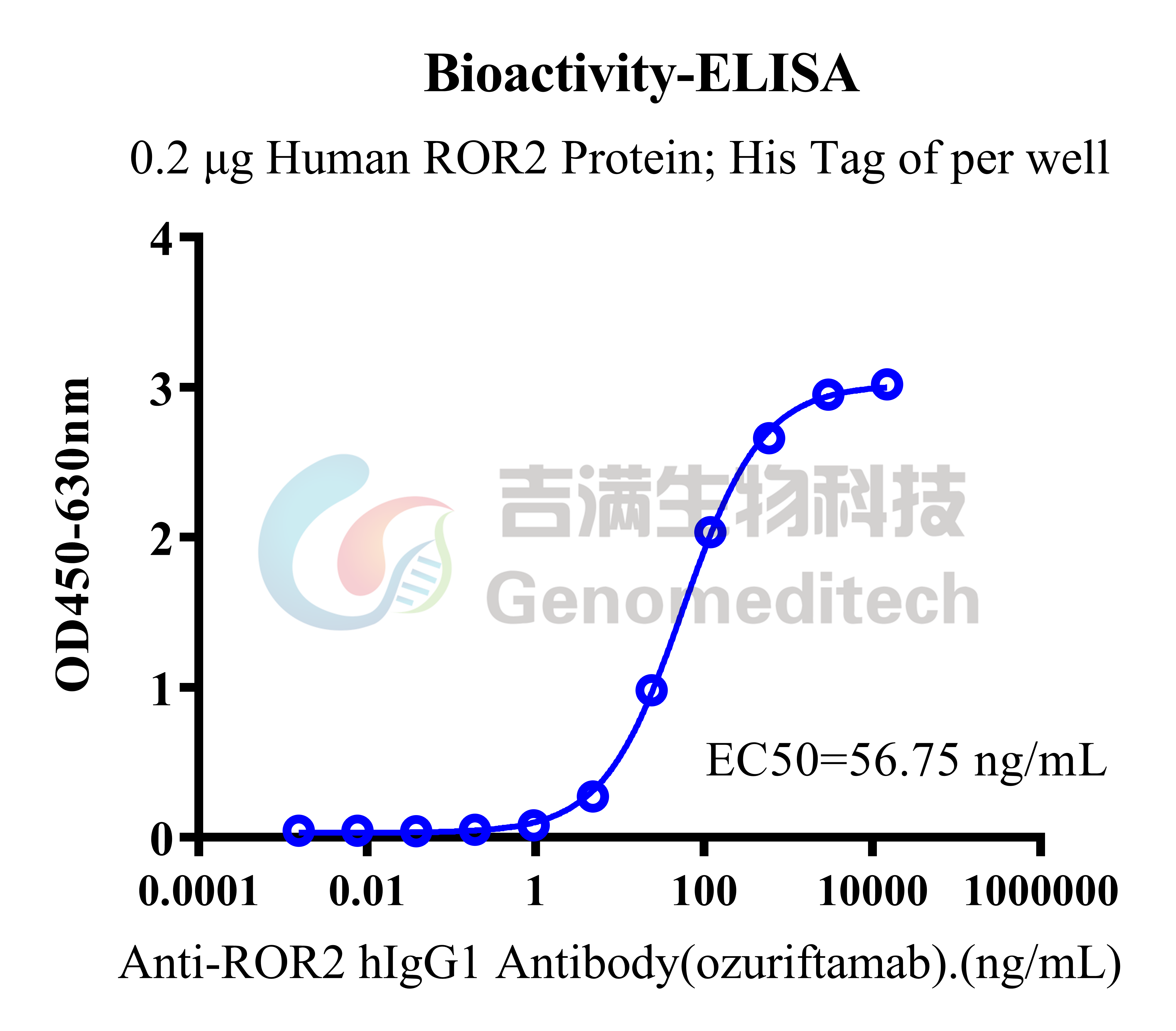
亲和力
相关产品
For laboratory research use only. Direct human use, including taking orally and injection and clinical use are forbidden.
Human ROR2 Protein; His Tag
货号
GM-88579RP
规格
100 μg
1 mg
立即询价
基本信息
数据展示
相关产品
基本信息
Alternative Names NTRKR2
Source Human ROR2 Protein; His Tag (GM-88579RP) is expressed from human 293 cells (HEK-293). It contains AA Glu 34 - Gly 403 (Accession # A1L4F5-1).
This protein carries a His tag at the C-terminus.
Purity > 95% as determined by SDS-PAGE
Endotoxin < 1 EU/μg, determined by LAL gel clotting assay
Predicted Mol Mass 42.2 kDa
Formulation Supplied as a 0.2 μm filtered solution of PBS, pH7.2-7.4.
Description ROR2 protein is a receptor tyrosine kinase that belongs to the ROR family (related to the tropomyosin receptor kinase family). It is encoded by the ROR2 gene and is a protein associated with skeletal development and tissue morphogenesis. ROR2 protein was initially identified in fetal tissues and later detected in various cell types including osteoblasts, chondrocytes, and multiple cancer cells. ROR2 protein regulates cell polarity, migration, and differentiation by binding to its ligand Wnt5a and activating non-canonical Wnt signaling pathways, such as the planar cell polarity (PCP) pathway and the Wnt/Ca²⁺ pathway. Osteoblasts and chondrocytes are important types of mesenchymal cells with critical functions in bone formation, cartilage development, and tissue patterning, making them central members of the skeletal system. Research indicates that ROR2 protein plays a significant role in promoting embryonic morphogenesis, enhancing cell movement, and modulating tissue organization. Additionally, the expression of ROR2 protein is associated with skeletal disorders such as Robinow syndrome, as well as tumor progression, metastasis, and immune modulation in various cancers, making it a potential target for regenerative medicine and cancer immunotherapy.
Alternative Names NTRKR2
Source Human ROR2 Protein; His Tag (GM-88579RP) is expressed from human 293 cells (HEK-293). It contains AA Glu 34 - Gly 403 (Accession # A1L4F5-1).
This protein carries a His tag at the C-terminus.
Purity > 95% as determined by SDS-PAGE
Endotoxin < 1 EU/μg, determined by LAL gel clotting assay
Predicted Mol Mass 42.2 kDa
Formulation Supplied as a 0.2 μm filtered solution of PBS, pH7.2-7.4.
Description ROR2 protein is a receptor tyrosine kinase that belongs to the ROR family (related to the tropomyosin receptor kinase family). It is encoded by the ROR2 gene and is a protein associated with skeletal development and tissue morphogenesis. ROR2 protein was initially identified in fetal tissues and later detected in various cell types including osteoblasts, chondrocytes, and multiple cancer cells. ROR2 protein regulates cell polarity, migration, and differentiation by binding to its ligand Wnt5a and activating non-canonical Wnt signaling pathways, such as the planar cell polarity (PCP) pathway and the Wnt/Ca²⁺ pathway. Osteoblasts and chondrocytes are important types of mesenchymal cells with critical functions in bone formation, cartilage development, and tissue patterning, making them central members of the skeletal system. Research indicates that ROR2 protein plays a significant role in promoting embryonic morphogenesis, enhancing cell movement, and modulating tissue organization. Additionally, the expression of ROR2 protein is associated with skeletal disorders such as Robinow syndrome, as well as tumor progression, metastasis, and immune modulation in various cancers, making it a potential target for regenerative medicine and cancer immunotherapy.
数据展示
纯度
亲和力
相关产品
Tel: 400-627-9288
留言咨询
重置
提交
客服
微信
电话
留言
留言咨询
重置
提交