








| Expression System | CHO |
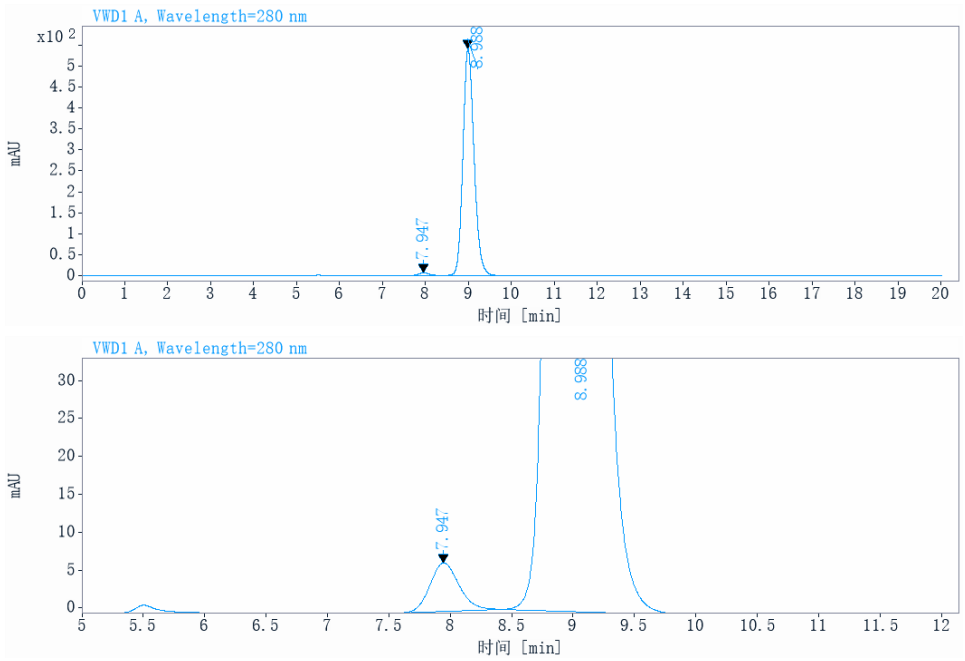
| Aggregation | < 5% as determined by SEC-HPLC |
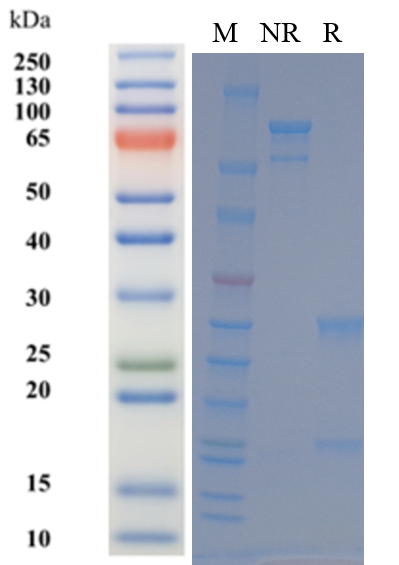
| Purity | > 95% as determined by SDS-PAGE |
| Endotoxin | < 1 EU/mg, determined by LAL gel clotting assay |
| Sterility | 0.22 μm Filtered |
| Target | Trem1 |
| Clone | / |
| Alternative Names | Trem-1, CD354 |
| Source/Isotype | Mouse IgG2a, Kappa |
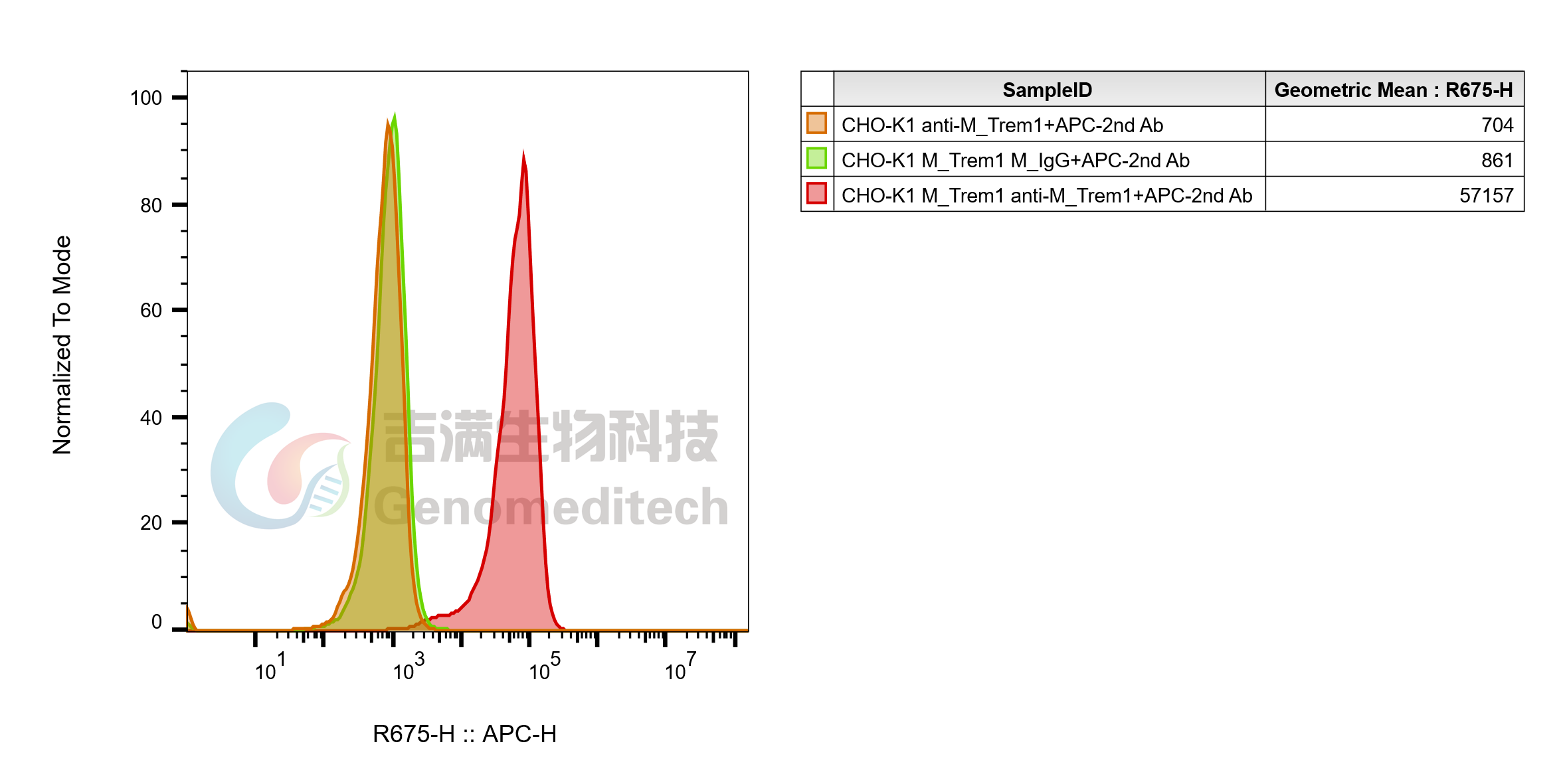
| Application | Flow Cytometry |
| Gene ID | 58217 (Mouse) |
| Description | Trem1 (Triggering Receptor Expressed on Myeloid cells 1) is a key amplifier of inflammatory responses and is overactivated in conditions such as sepsis, pneumonia, inflammatory bowel disease, and acute pancreatitis, contributing to cytokine storms and tissue damage. Anti-Trem1 antibodies or inhibitors can block this signaling pathway, thereby alleviating hyperinflammation and restoring immune homeostasis. Recent studies also suggest that targeting Trem1 may improve the tumor immune microenvironment and enhance anti-tumor immunity. Thus, anti-Trem1 not only offers a novel therapeutic strategy for inflammatory diseases but also opens new avenues for precision immunomodulation and biologic drug development. Its potential for clinical translation warrants further investigation. |
| Formulation | Phosphate-buffered solution, pH 7.2-7.4. |
| Expression System | CHO |
| Aggregation | < 5% as determined by SEC-HPLC |
| Purity | > 95% as determined by SDS-PAGE |
| Endotoxin | < 1 EU/mg, determined by LAL gel clotting assay |
| Sterility | 0.22 μm Filtered |
| Target | Trem1 |
| Clone | / |
| Alternative Names | Trem-1, CD354 |
| Source/Isotype | Mouse IgG2a, Kappa |
| Application | Flow Cytometry |
| Gene ID | 58217 (Mouse) |
| Description | Trem1 (Triggering Receptor Expressed on Myeloid cells 1) is a key amplifier of inflammatory responses and is overactivated in conditions such as sepsis, pneumonia, inflammatory bowel disease, and acute pancreatitis, contributing to cytokine storms and tissue damage. Anti-Trem1 antibodies or inhibitors can block this signaling pathway, thereby alleviating hyperinflammation and restoring immune homeostasis. Recent studies also suggest that targeting Trem1 may improve the tumor immune microenvironment and enhance anti-tumor immunity. Thus, anti-Trem1 not only offers a novel therapeutic strategy for inflammatory diseases but also opens new avenues for precision immunomodulation and biologic drug development. Its potential for clinical translation warrants further investigation. |
| Formulation | Phosphate-buffered solution, pH 7.2-7.4. |