



Human NCR3(NKP30) Protein; hFc Tag
货号
GM-87645RP
规格
100 μg
1 mg
立即询价
基本信息
数据展示
相关产品
基本信息
Alternative Names CD337, 1C7, LY117, MALS
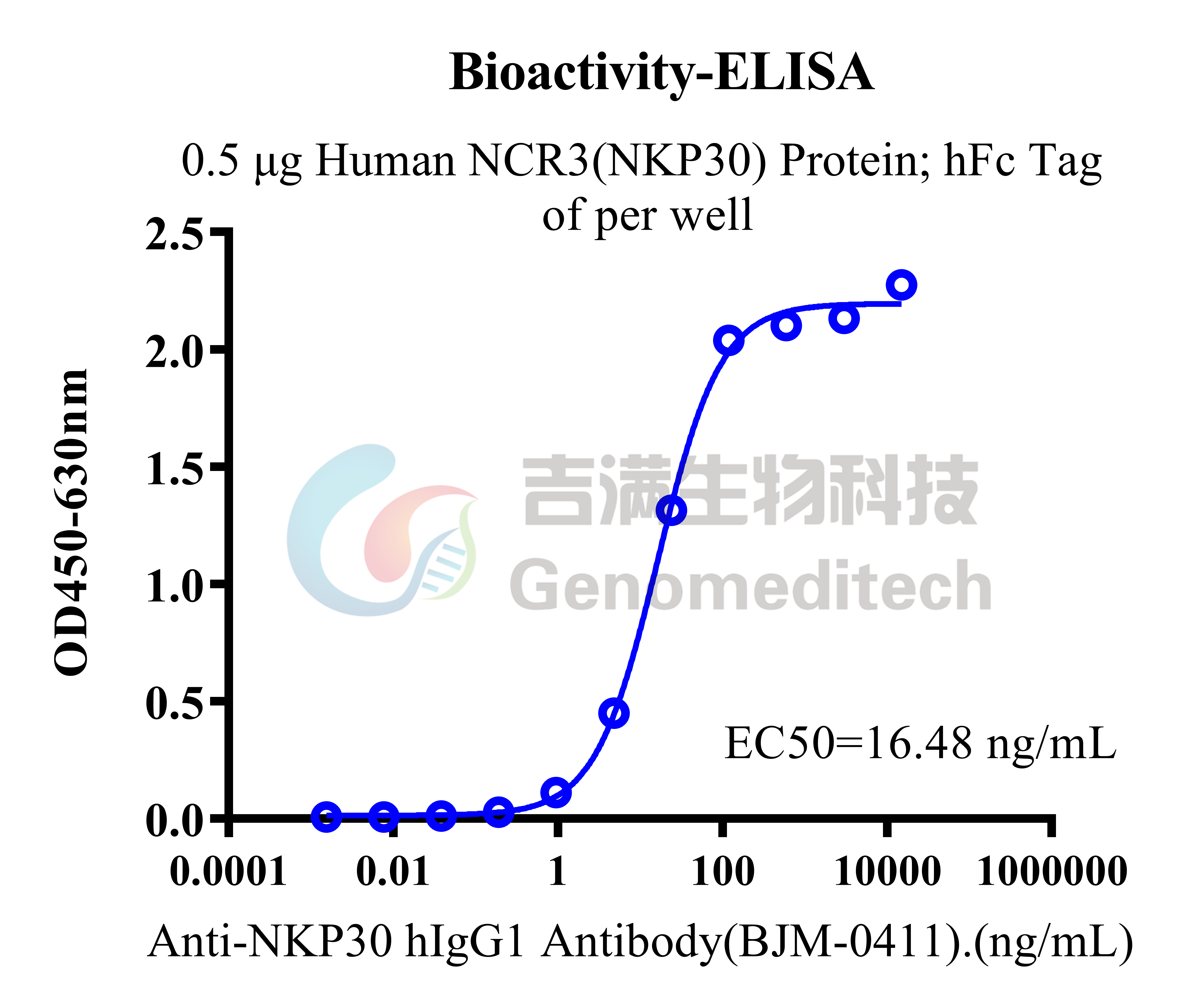
Source Human NCR3(NKP30) Protein; hFc Tag (GM-87645RP) is expressed from human 293 cells (HEK-293). It contains AA Leu 19 - Gly 135 (Accession # AAH52582).
This protein carries a hFc tag at the C-terminus.
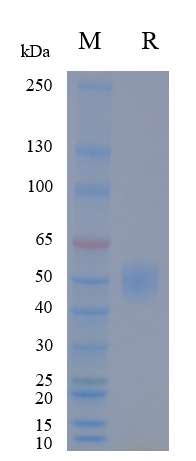
Purity > 95% as determined by SDS-PAGE
Endotoxin < 1 EU/μg, determined by LAL gel clotting assay
Predicted Mol Mass 38.8 KDa
Formulation Supplied as a 0.2 μm filtered solution of PBS, pH7.2-7.4.
Description NCR3 protein, also known as NKp30, is a member of the natural cytotoxicity receptor (NCR) family. NCR3 is expressed on human NK cells and certain subsets of T cells. It is an important cell surface protein that plays a key role in regulating cytotoxicity and immune responses.
NCR3 protein can bind to ligands, triggering cell signaling pathways that prompt natural killer cells to launch immune attacks against pathogens, abnormal cells, and tumor cells. Through the recognition receptor NCR3, NK cells can identify tumor cells with anaerobic metabolism, cells infected with viruses, and other abnormal cells, initiating cytotoxic responses to kill them.
The role of NCR3 protein in the immune system is significant, contributing to the maintenance of immune balance, clearance of abnormal cells, and defense against infections. Studying the function and regulatory mechanisms of NCR3 protein helps deepen our understanding of the immune response mechanisms of immune cells, providing important theoretical basis for the development of disease treatments and immunotherapies.
Alternative Names CD337, 1C7, LY117, MALS
Source Human NCR3(NKP30) Protein; hFc Tag (GM-87645RP) is expressed from human 293 cells (HEK-293). It contains AA Leu 19 - Gly 135 (Accession # AAH52582).
This protein carries a hFc tag at the C-terminus.
Purity > 95% as determined by SDS-PAGE
Endotoxin < 1 EU/μg, determined by LAL gel clotting assay
Predicted Mol Mass 38.8 KDa
Formulation Supplied as a 0.2 μm filtered solution of PBS, pH7.2-7.4.
Description NCR3 protein, also known as NKp30, is a member of the natural cytotoxicity receptor (NCR) family. NCR3 is expressed on human NK cells and certain subsets of T cells. It is an important cell surface protein that plays a key role in regulating cytotoxicity and immune responses.
NCR3 protein can bind to ligands, triggering cell signaling pathways that prompt natural killer cells to launch immune attacks against pathogens, abnormal cells, and tumor cells. Through the recognition receptor NCR3, NK cells can identify tumor cells with anaerobic metabolism, cells infected with viruses, and other abnormal cells, initiating cytotoxic responses to kill them.
The role of NCR3 protein in the immune system is significant, contributing to the maintenance of immune balance, clearance of abnormal cells, and defense against infections. Studying the function and regulatory mechanisms of NCR3 protein helps deepen our understanding of the immune response mechanisms of immune cells, providing important theoretical basis for the development of disease treatments and immunotherapies.
数据展示
纯度
亲和力
相关产品
For laboratory research use only. Direct human use, including taking orally and injection and clinical use are forbidden.
Human NCR3(NKP30) Protein; hFc Tag
货号
GM-87645RP
规格
100 μg
1 mg
立即询价
基本信息
数据展示
相关产品
基本信息
Alternative Names CD337, 1C7, LY117, MALS
Source Human NCR3(NKP30) Protein; hFc Tag (GM-87645RP) is expressed from human 293 cells (HEK-293). It contains AA Leu 19 - Gly 135 (Accession # AAH52582).
This protein carries a hFc tag at the C-terminus.
Purity > 95% as determined by SDS-PAGE
Endotoxin < 1 EU/μg, determined by LAL gel clotting assay
Predicted Mol Mass 38.8 KDa
Formulation Supplied as a 0.2 μm filtered solution of PBS, pH7.2-7.4.
Description NCR3 protein, also known as NKp30, is a member of the natural cytotoxicity receptor (NCR) family. NCR3 is expressed on human NK cells and certain subsets of T cells. It is an important cell surface protein that plays a key role in regulating cytotoxicity and immune responses.
NCR3 protein can bind to ligands, triggering cell signaling pathways that prompt natural killer cells to launch immune attacks against pathogens, abnormal cells, and tumor cells. Through the recognition receptor NCR3, NK cells can identify tumor cells with anaerobic metabolism, cells infected with viruses, and other abnormal cells, initiating cytotoxic responses to kill them.
The role of NCR3 protein in the immune system is significant, contributing to the maintenance of immune balance, clearance of abnormal cells, and defense against infections. Studying the function and regulatory mechanisms of NCR3 protein helps deepen our understanding of the immune response mechanisms of immune cells, providing important theoretical basis for the development of disease treatments and immunotherapies.
Alternative Names CD337, 1C7, LY117, MALS
Source Human NCR3(NKP30) Protein; hFc Tag (GM-87645RP) is expressed from human 293 cells (HEK-293). It contains AA Leu 19 - Gly 135 (Accession # AAH52582).
This protein carries a hFc tag at the C-terminus.
Purity > 95% as determined by SDS-PAGE
Endotoxin < 1 EU/μg, determined by LAL gel clotting assay
Predicted Mol Mass 38.8 KDa
Formulation Supplied as a 0.2 μm filtered solution of PBS, pH7.2-7.4.
Description NCR3 protein, also known as NKp30, is a member of the natural cytotoxicity receptor (NCR) family. NCR3 is expressed on human NK cells and certain subsets of T cells. It is an important cell surface protein that plays a key role in regulating cytotoxicity and immune responses.
NCR3 protein can bind to ligands, triggering cell signaling pathways that prompt natural killer cells to launch immune attacks against pathogens, abnormal cells, and tumor cells. Through the recognition receptor NCR3, NK cells can identify tumor cells with anaerobic metabolism, cells infected with viruses, and other abnormal cells, initiating cytotoxic responses to kill them.
The role of NCR3 protein in the immune system is significant, contributing to the maintenance of immune balance, clearance of abnormal cells, and defense against infections. Studying the function and regulatory mechanisms of NCR3 protein helps deepen our understanding of the immune response mechanisms of immune cells, providing important theoretical basis for the development of disease treatments and immunotherapies.
数据展示
纯度
亲和力
相关产品
Tel: 400-627-9288
留言咨询
重置
提交
客服
微信
电话
留言
留言咨询
重置
提交