




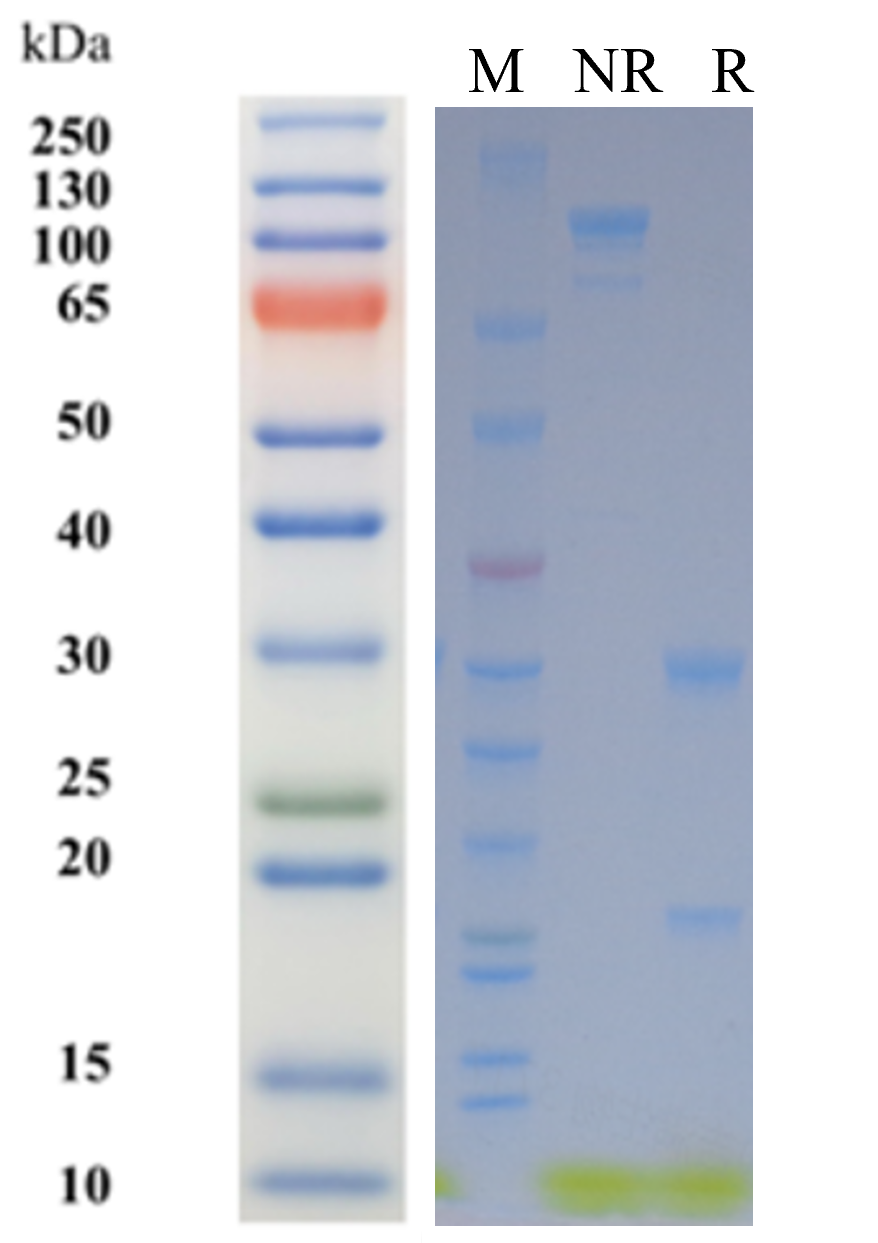
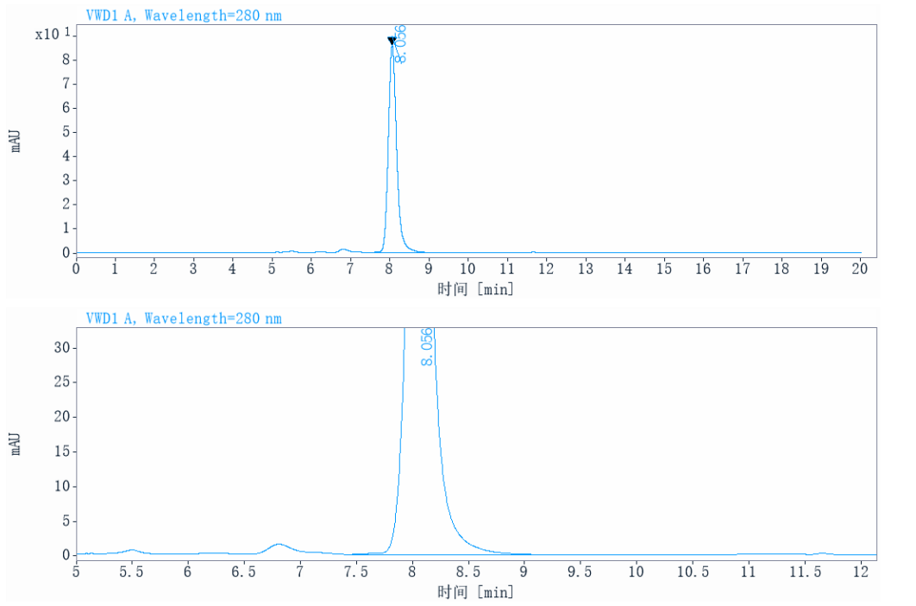




| Species Reactivity | Human |
| Clone | pascolizumab |
| Source/Isotype | Human IgG1, Kappa |
| Application | / |
| Specificity | Detects IL-4 |
| Gene | IL-4 |
| Other Names | BCGF-1, BCGF1, BSF-1, BSF1, IL4 |
| Gene ID | 3565 (human) |
| Background | Pascolizumab is a humanized anti-IL-4 monoclonal antibody developed specifically for the treatment of allergic diseases such as asthma. IL-4, a key cytokine secreted by type 2 helper T cells (Th2) , plays a central role in the early stages of asthma, activating Th2 cells, promoting immunoglobulin E (IgE) production, and triggering airway inflammation. Pascolizumab inhibits downstream inflammatory responses by precisely binding IL-4 and blocking its binding to the receptor. Although early clinical trials showed good safety, it failed to significantly reduce IgE levels in patients with asthma, leading to the termination of research. However, its mechanism of action still provides an important reference for the study of asthma treatment. |
| Storage | Store at 2-8℃ short term (1-2 weeks).Store at ≤ -20℃ long term. Avoid repeated freeze-thaw. |
| Formulation | Supplied as a 0.2 μm filtered solution of PBS, pH7.2-7.4. |
| Endotoxin | < 1 EU/mg, determined by LAL gel clotting assay |
| Species Reactivity | Human |
| Clone | pascolizumab |
| Source/Isotype | Human IgG1, Kappa |
| Application | / |
| Specificity | Detects IL-4 |
| Gene | IL-4 |
| Other Names | BCGF-1, BCGF1, BSF-1, BSF1, IL4 |
| Gene ID | 3565 (human) |
| Background | Pascolizumab is a humanized anti-IL-4 monoclonal antibody developed specifically for the treatment of allergic diseases such as asthma. IL-4, a key cytokine secreted by type 2 helper T cells (Th2) , plays a central role in the early stages of asthma, activating Th2 cells, promoting immunoglobulin E (IgE) production, and triggering airway inflammation. Pascolizumab inhibits downstream inflammatory responses by precisely binding IL-4 and blocking its binding to the receptor. Although early clinical trials showed good safety, it failed to significantly reduce IgE levels in patients with asthma, leading to the termination of research. However, its mechanism of action still provides an important reference for the study of asthma treatment. |
| Storage | Store at 2-8℃ short term (1-2 weeks).Store at ≤ -20℃ long term. Avoid repeated freeze-thaw. |
| Formulation | Supplied as a 0.2 μm filtered solution of PBS, pH7.2-7.4. |
| Endotoxin | < 1 EU/mg, determined by LAL gel clotting assay |