




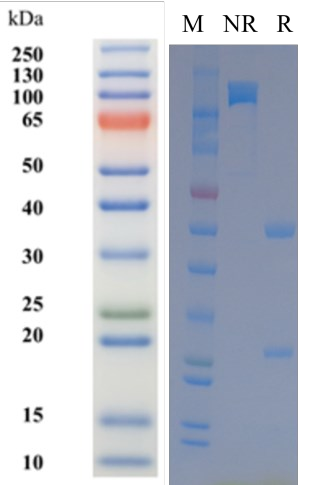
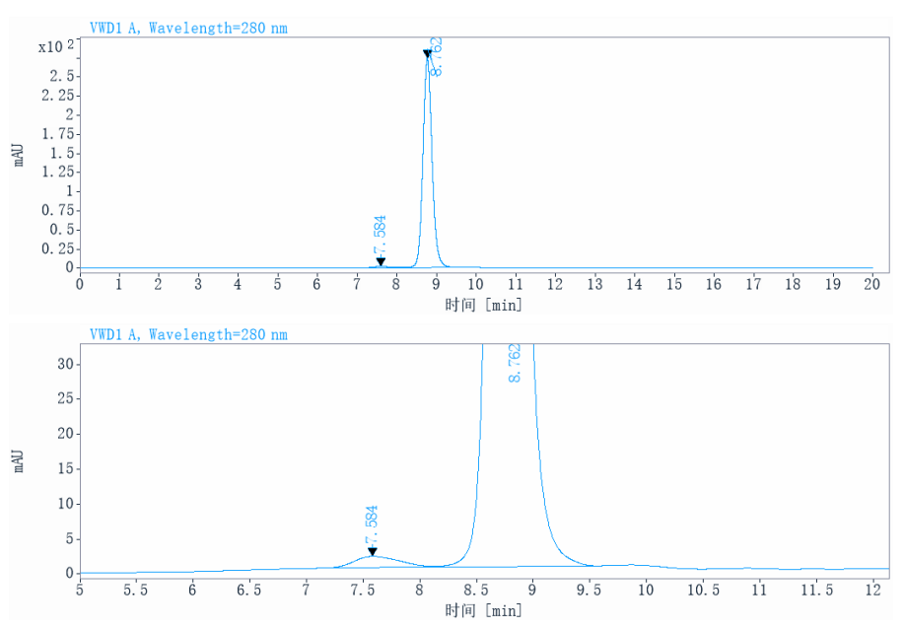




| Species Reactivity | Human |
| Clone | Naratuximab |
| Source/Isotype | Human IgG1, Kappa |
| Application | / |
| Target | Detects CD37 |
| Gene | CD37 |
| Other Names | GP52-40, TSPAN26 |
| Gene ID | 951 (Human) |
| Background | Naratuximab is an antibody-drug conjugate targeting CD37, which consists of a humanized anti-CD37 antibody coupled to the cytotoxic drug DM1 via a non-cleavable linker, and a non-cleavable linker, it is mainly used to treat relapsed/refractory b-cell non-hodgkin lymphoma (B-nhl) , especially diffuse large b-cell lymphoma (DLBCL) . Its mechanism of action is: by specifically binding to CD37(a transmembrane protein highly expressed in b-cell malignancies) , releasing DM1 after endocytosis of ADC, inhibiting microtubule polymerization, leading to tumor cell cycle arrest and apoptosis, and inducing apoptosis, at the same time, it reduces the non-specific toxicity to normal tissues. The drug also shows potential in other B-NHL subtypes such as mantle cell lymphoma and follicular lymphoma, as well as chronic lymphocytic leukemia (CLL) and acute myeloid leukemia (AML) , phase II clinical trials have been conducted in many countries around the world. As an innovative ADC targeting CD37, NARATUXIMAB offers a new therapeutic option for patients with relapsed/refractory b-cell malignancies through precision targeting and efficient load delivery, providing a promising strategy for the treatment of patients with recurrent/refractory b-cell malignancies, in particular, it is of great value in addressing the needs of patients who are resistant to traditional treatment and can not tolerate high-intensity treatment. |
| Storage | Store at 2-8℃ short term (1-2 weeks).Store at ≤ -20℃ long term. Avoid repeated freeze-thaw. |
| Formulation | Supplied as a 0.2 μm filtered solution of PBS, pH7.2-7.4. |
| Endotoxin | < 1 EU/mg, determined by LAL gel clotting assay |
| Species Reactivity | Human |
| Clone | Naratuximab |
| Source/Isotype | Human IgG1, Kappa |
| Application | / |
| Target | Detects CD37 |
| Gene | CD37 |
| Other Names | GP52-40, TSPAN26 |
| Gene ID | 951 (Human) |
| Background | Naratuximab is an antibody-drug conjugate targeting CD37, which consists of a humanized anti-CD37 antibody coupled to the cytotoxic drug DM1 via a non-cleavable linker, and a non-cleavable linker, it is mainly used to treat relapsed/refractory b-cell non-hodgkin lymphoma (B-nhl) , especially diffuse large b-cell lymphoma (DLBCL) . Its mechanism of action is: by specifically binding to CD37(a transmembrane protein highly expressed in b-cell malignancies) , releasing DM1 after endocytosis of ADC, inhibiting microtubule polymerization, leading to tumor cell cycle arrest and apoptosis, and inducing apoptosis, at the same time, it reduces the non-specific toxicity to normal tissues. The drug also shows potential in other B-NHL subtypes such as mantle cell lymphoma and follicular lymphoma, as well as chronic lymphocytic leukemia (CLL) and acute myeloid leukemia (AML) , phase II clinical trials have been conducted in many countries around the world. As an innovative ADC targeting CD37, NARATUXIMAB offers a new therapeutic option for patients with relapsed/refractory b-cell malignancies through precision targeting and efficient load delivery, providing a promising strategy for the treatment of patients with recurrent/refractory b-cell malignancies, in particular, it is of great value in addressing the needs of patients who are resistant to traditional treatment and can not tolerate high-intensity treatment. |
| Storage | Store at 2-8℃ short term (1-2 weeks).Store at ≤ -20℃ long term. Avoid repeated freeze-thaw. |
| Formulation | Supplied as a 0.2 μm filtered solution of PBS, pH7.2-7.4. |
| Endotoxin | < 1 EU/mg, determined by LAL gel clotting assay |