




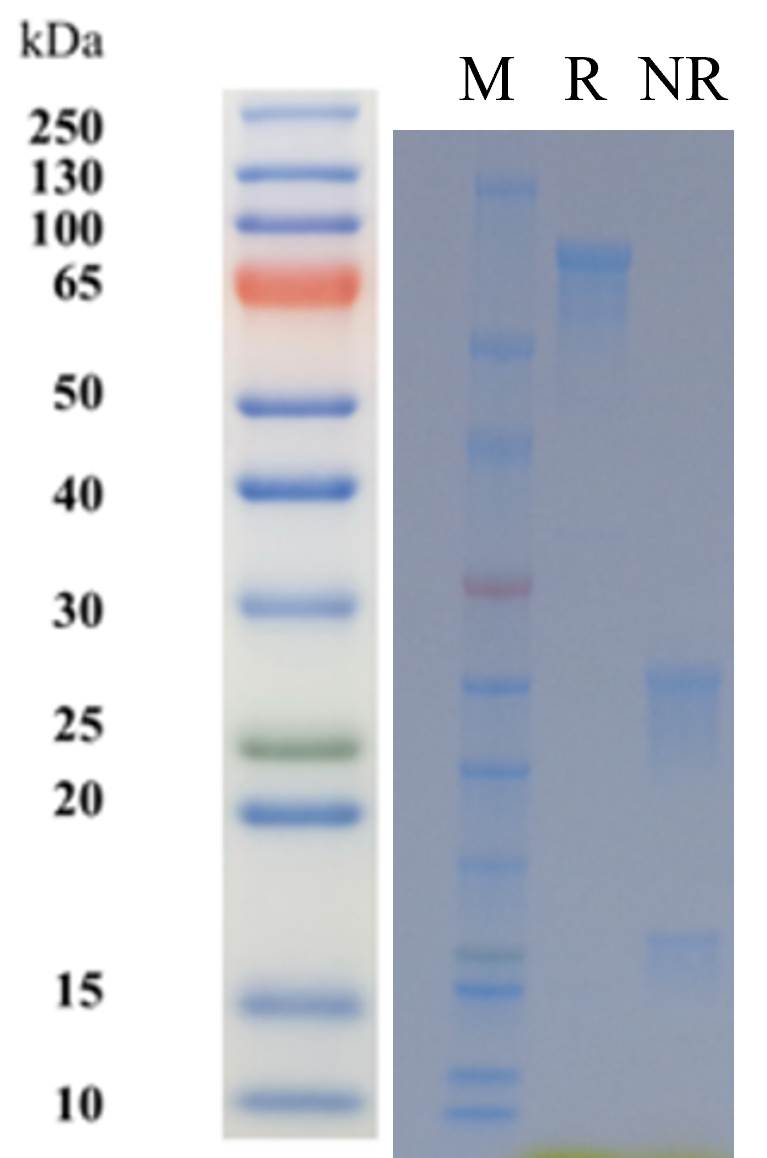
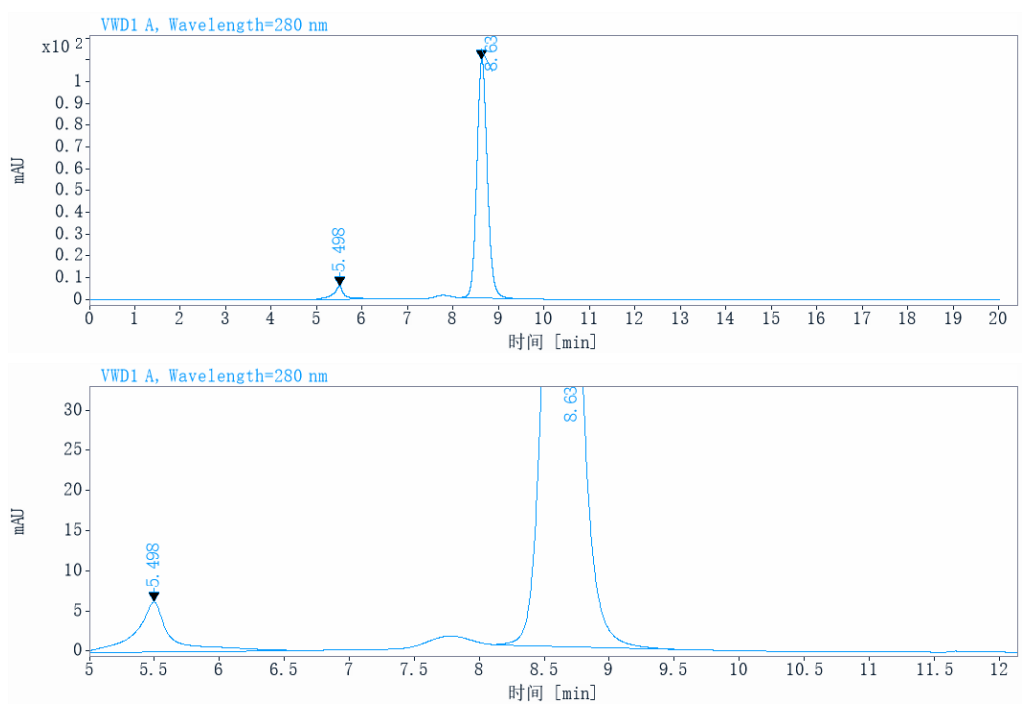




| Species Reactivity | Human |
| Clone | garetosmab |
| Source/Isotype | Human IgG4(S228P), Kappa |
| Application | / |
| Target | Detects INHBA |
| Gene | INHBA |
| Other Names | EDF, FRP, Activin A |
| Gene ID | 3624 (Human) |
| Background | As a member of the TGF-β superfamily, the INHBA gene (inhibin BA) encodes the BA subunit of active protein A, which plays a central role in non-tumor physiological and pathological processes through multidimensional pathways. In the regulation of the reproductive system, its product inhibin B (αβa dimer) is a key endocrine marker: secreted by the granulosa cells of small and medium-sized follicles in women, reflecting follicular reserve function, and the role of Inhibin B in the regulation of the reproductive system, in vitro production of inhibin B (αβa dimer) for assessment of ovarian reserve and prediction of the role of assisted reproductive technology (ART) . In terms of metabolic regulation, INHBA mediates mitochondrial succinate efflux and cytosolic GSH transport through SLC25A10 to maintain redox homeostasis, and its cytoskeleton protein function can block TRIM21-mediated degradation of SLC25A10 ubiquitination, which may provide a theoretical basis for the further study of INHBA, effects on energy metabolism and cell survival. In terms of immune tolerance regulation, although it has no direct relevance to tumors, it is involved in local immune tolerance regulation through active protein A in the reproductive microenvironment, and it is also involved in the regulation of immune tolerance, such as inhibiting macrophage hyperactivation and maintaining immune homeostasis in reproductive tissues. |
| Storage | Store at 2-8℃ short term (1-2 weeks).Store at ≤ -20℃ long term. Avoid repeated freeze-thaw. |
| Formulation | Supplied as a 0.2 μm filtered solution of PBS, pH7.2-7.4. |
| Endotoxin | < 1 EU/mg, determined by LAL gel clotting assay |
| Species Reactivity | Human |
| Clone | garetosmab |
| Source/Isotype | Human IgG4(S228P), Kappa |
| Application | / |
| Target | Detects INHBA |
| Gene | INHBA |
| Other Names | EDF, FRP, Activin A |
| Gene ID | 3624 (Human) |
| Background | As a member of the TGF-β superfamily, the INHBA gene (inhibin BA) encodes the BA subunit of active protein A, which plays a central role in non-tumor physiological and pathological processes through multidimensional pathways. In the regulation of the reproductive system, its product inhibin B (αβa dimer) is a key endocrine marker: secreted by the granulosa cells of small and medium-sized follicles in women, reflecting follicular reserve function, and the role of Inhibin B in the regulation of the reproductive system, in vitro production of inhibin B (αβa dimer) for assessment of ovarian reserve and prediction of the role of assisted reproductive technology (ART) . In terms of metabolic regulation, INHBA mediates mitochondrial succinate efflux and cytosolic GSH transport through SLC25A10 to maintain redox homeostasis, and its cytoskeleton protein function can block TRIM21-mediated degradation of SLC25A10 ubiquitination, which may provide a theoretical basis for the further study of INHBA, effects on energy metabolism and cell survival. In terms of immune tolerance regulation, although it has no direct relevance to tumors, it is involved in local immune tolerance regulation through active protein A in the reproductive microenvironment, and it is also involved in the regulation of immune tolerance, such as inhibiting macrophage hyperactivation and maintaining immune homeostasis in reproductive tissues. |
| Storage | Store at 2-8℃ short term (1-2 weeks).Store at ≤ -20℃ long term. Avoid repeated freeze-thaw. |
| Formulation | Supplied as a 0.2 μm filtered solution of PBS, pH7.2-7.4. |
| Endotoxin | < 1 EU/mg, determined by LAL gel clotting assay |