




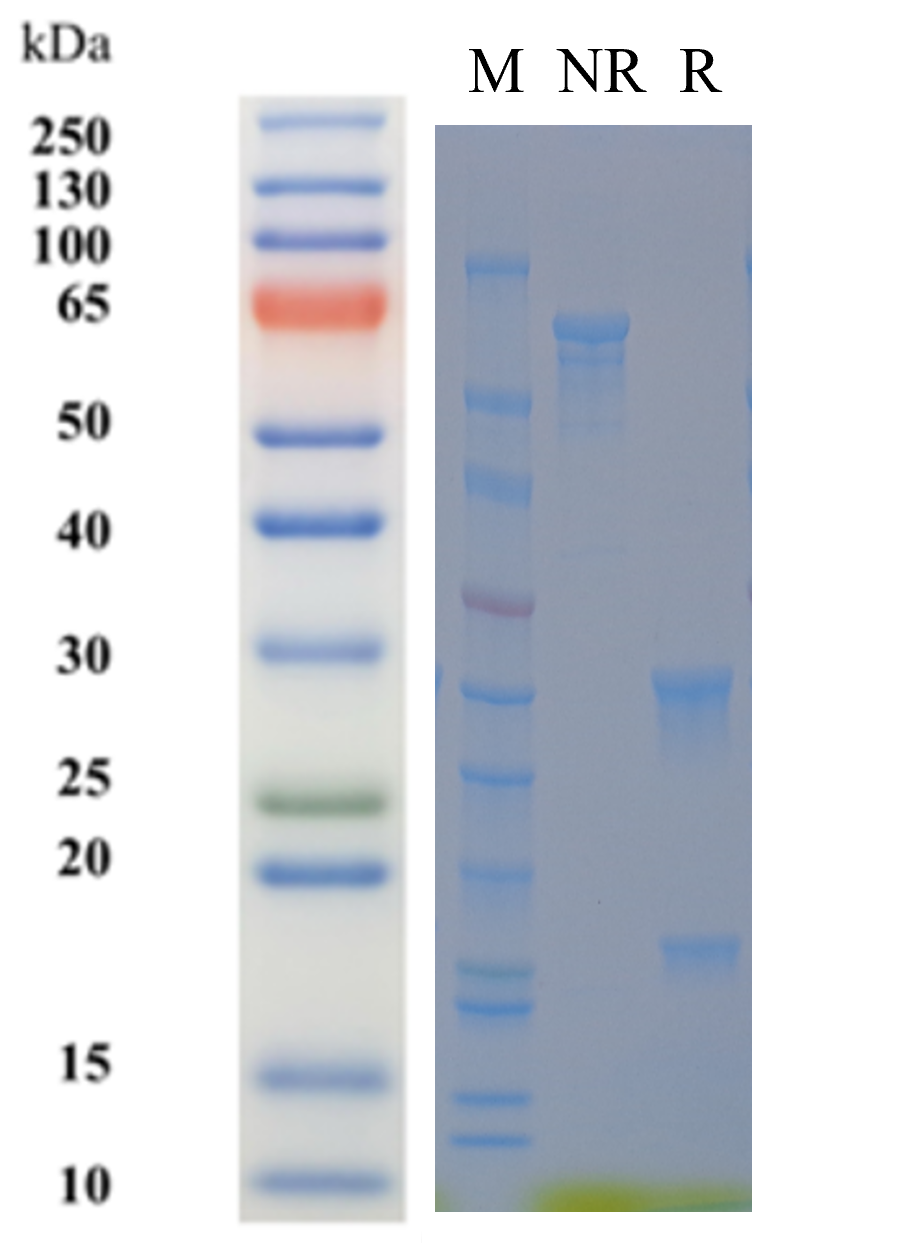
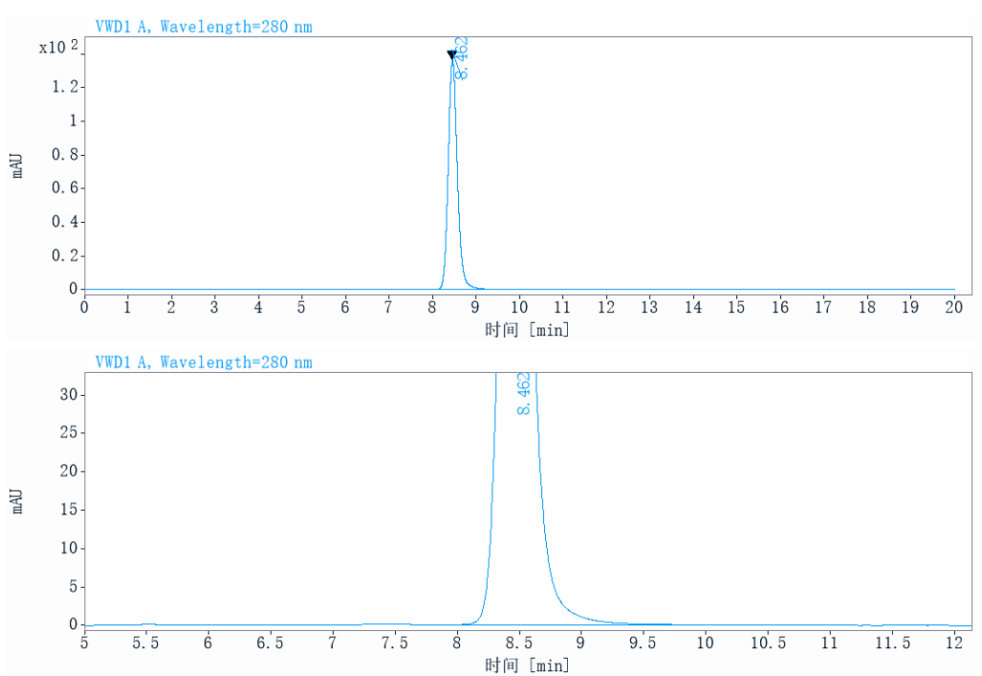




| Expression System | CHO |
| Aggregation | < 5% as determined by SEC-HPLC |
| Purity | > 95% as determined by SDS-PAGE |
| Endotoxin | < 1 EU/mg, determined by LAL gel clotting assay |
| Sterility | 0.2 μm Filtered |
| Target | KIR3DL2 |
| Clone | Lacutamab |
| Alternative Names | 3DL2, CD158K, KIR-3DL2, NKAT-4, NKAT4, NKAT4B, p140 |
| Source/Isotype | Human IgG1(REEM, S239D, I332E), Kappa |
| Application | / |
| Description | Lacutamab is a humanized monoclonal antibody targeting KIR3DL2 that enhances the antitumor activity of natural killer cells (NK cells) and T cells and reduces tumor immune escape by blocking KIR3DL2 interaction with HLA ligands. KIR3DL2 expression is restricted in normal tissues, but is expressed in approximately 65% of patients with cutaneous t-cell lymphoma (CTCL) , especially in patients with Sézary syndrome, where the expression rate is up to 90% , about 50% are expressed in patients with mycosis fungoides and peripheral t-cell lymphoma. Its research background focuses on the regulation of immune cell activity by targeting KIR3DL2 receptor, which provides a new treatment strategy for refractory lymphomas such as CTCL. At present, a number of clinical trials continue to verify its safety and effectiveness. |
| Formulation | phosphate-buffered solution, pH 7.2-7.4. |
| Expression System | CHO |
| Aggregation | < 5% as determined by SEC-HPLC |
| Purity | > 95% as determined by SDS-PAGE |
| Endotoxin | < 1 EU/mg, determined by LAL gel clotting assay |
| Sterility | 0.2 μm Filtered |
| Target | KIR3DL2 |
| Clone | Lacutamab |
| Alternative Names | 3DL2, CD158K, KIR-3DL2, NKAT-4, NKAT4, NKAT4B, p140 |
| Source/Isotype | Human IgG1(REEM, S239D, I332E), Kappa |
| Application | / |
| Description | Lacutamab is a humanized monoclonal antibody targeting KIR3DL2 that enhances the antitumor activity of natural killer cells (NK cells) and T cells and reduces tumor immune escape by blocking KIR3DL2 interaction with HLA ligands. KIR3DL2 expression is restricted in normal tissues, but is expressed in approximately 65% of patients with cutaneous t-cell lymphoma (CTCL) , especially in patients with Sézary syndrome, where the expression rate is up to 90% , about 50% are expressed in patients with mycosis fungoides and peripheral t-cell lymphoma. Its research background focuses on the regulation of immune cell activity by targeting KIR3DL2 receptor, which provides a new treatment strategy for refractory lymphomas such as CTCL. At present, a number of clinical trials continue to verify its safety and effectiveness. |
| Formulation | phosphate-buffered solution, pH 7.2-7.4. |