




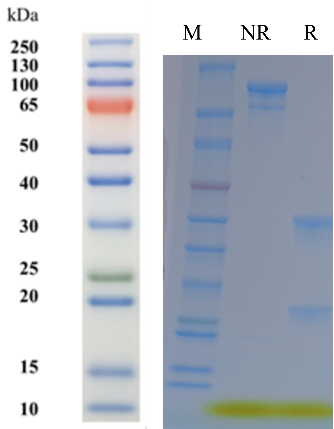
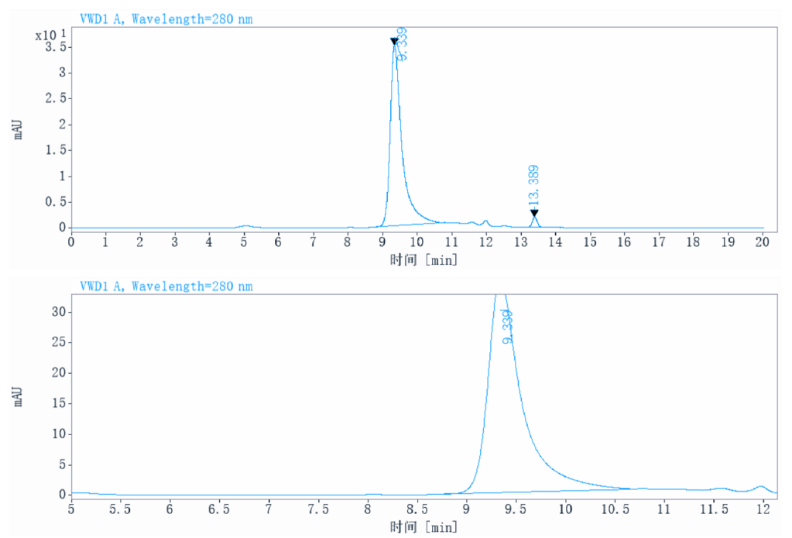




| Species Reactivity | Human; |
| Clone | 8G8F5 |
| Source/Isotype | Mouse IgG2a,Kappa |
| Application | / |
| Specificity | Detects KLK3 |
| Gene | KLK3 |
| Other Names | Fletcher factor, kallikrein B, plasma (Fletcher factor) 1, kininogenin, KLK3 plasma kallikrein, KLKB1, plasma kallikrein heavy chain, plasma kallikrein light chain, Plasma Kallikrein, Plasma Prekallikrein, PPK, KLKB1 |
| Gene ID | 354 (human) |
| Background | The KLK3 gene, a key member of the Human Tissue Kallikrein family, is located on chromosome 19q13.33 and encodes prostate-specific antigen (PSA) , a protein that plays a central role in the liquefaction of prostatic fluid, liquefaction of semen condensates is achieved by hydrolysis of high-molecular-weight seminal vesicle proteins. KLK3 gene is not only specifically expressed in prostate tissue, but also its serum level has become a gold biomarker for the diagnosis, disease monitoring and prognosis evaluation of prostate cancer, which is widely used in clinical screening and recurrence monitoring. In addition, KLK3 gene variants are significantly associated with the risk and clinical phenotype of prostate cancer, and specific single-nucleotide polymorphism (SNP) loci can affect the occurrence, tumor stage and risk grade of prostate cancer. In the field of drug development, KLK3-based targeted therapies are emerging, such as the KLK3 inhibitor Afalaza, which has shown potential to reduce the severity of lower urinary tract symptoms and reduce prostate volume in the treatment of benign prostatic hyperplasia, radioligand therapy targeting KLK3 also offers a new treatment option for patients with advanced prostate cancer. |
| Storage | Store at 2-8℃ short term (1-2 weeks).Store at ≤ -20℃ long term. Avoid repeated freeze-thaw. |
| Formulation | Supplied as a 0.2 μm filtered solution of PBS, pH7.2-7.4. |
| Endotoxin | < 1 EU/mg, determined by LAL gel clotting assay |
| Species Reactivity | Human; |
| Clone | 8G8F5 |
| Source/Isotype | Mouse IgG2a,Kappa |
| Application | / |
| Specificity | Detects KLK3 |
| Gene | KLK3 |
| Other Names | Fletcher factor, kallikrein B, plasma (Fletcher factor) 1, kininogenin, KLK3 plasma kallikrein, KLKB1, plasma kallikrein heavy chain, plasma kallikrein light chain, Plasma Kallikrein, Plasma Prekallikrein, PPK, KLKB1 |
| Gene ID | 354 (human) |
| Background | The KLK3 gene, a key member of the Human Tissue Kallikrein family, is located on chromosome 19q13.33 and encodes prostate-specific antigen (PSA) , a protein that plays a central role in the liquefaction of prostatic fluid, liquefaction of semen condensates is achieved by hydrolysis of high-molecular-weight seminal vesicle proteins. KLK3 gene is not only specifically expressed in prostate tissue, but also its serum level has become a gold biomarker for the diagnosis, disease monitoring and prognosis evaluation of prostate cancer, which is widely used in clinical screening and recurrence monitoring. In addition, KLK3 gene variants are significantly associated with the risk and clinical phenotype of prostate cancer, and specific single-nucleotide polymorphism (SNP) loci can affect the occurrence, tumor stage and risk grade of prostate cancer. In the field of drug development, KLK3-based targeted therapies are emerging, such as the KLK3 inhibitor Afalaza, which has shown potential to reduce the severity of lower urinary tract symptoms and reduce prostate volume in the treatment of benign prostatic hyperplasia, radioligand therapy targeting KLK3 also offers a new treatment option for patients with advanced prostate cancer. |
| Storage | Store at 2-8℃ short term (1-2 weeks).Store at ≤ -20℃ long term. Avoid repeated freeze-thaw. |
| Formulation | Supplied as a 0.2 μm filtered solution of PBS, pH7.2-7.4. |
| Endotoxin | < 1 EU/mg, determined by LAL gel clotting assay |