









| Expression System | CHO |
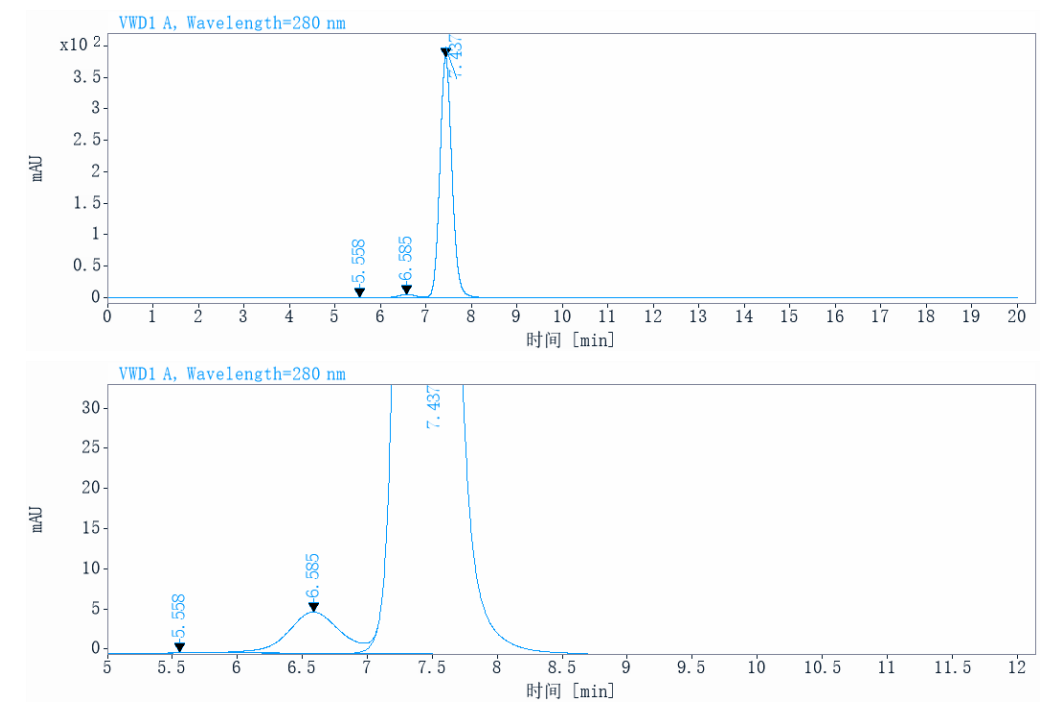
| Aggregation | < 5% as determined by SEC-HPLC |
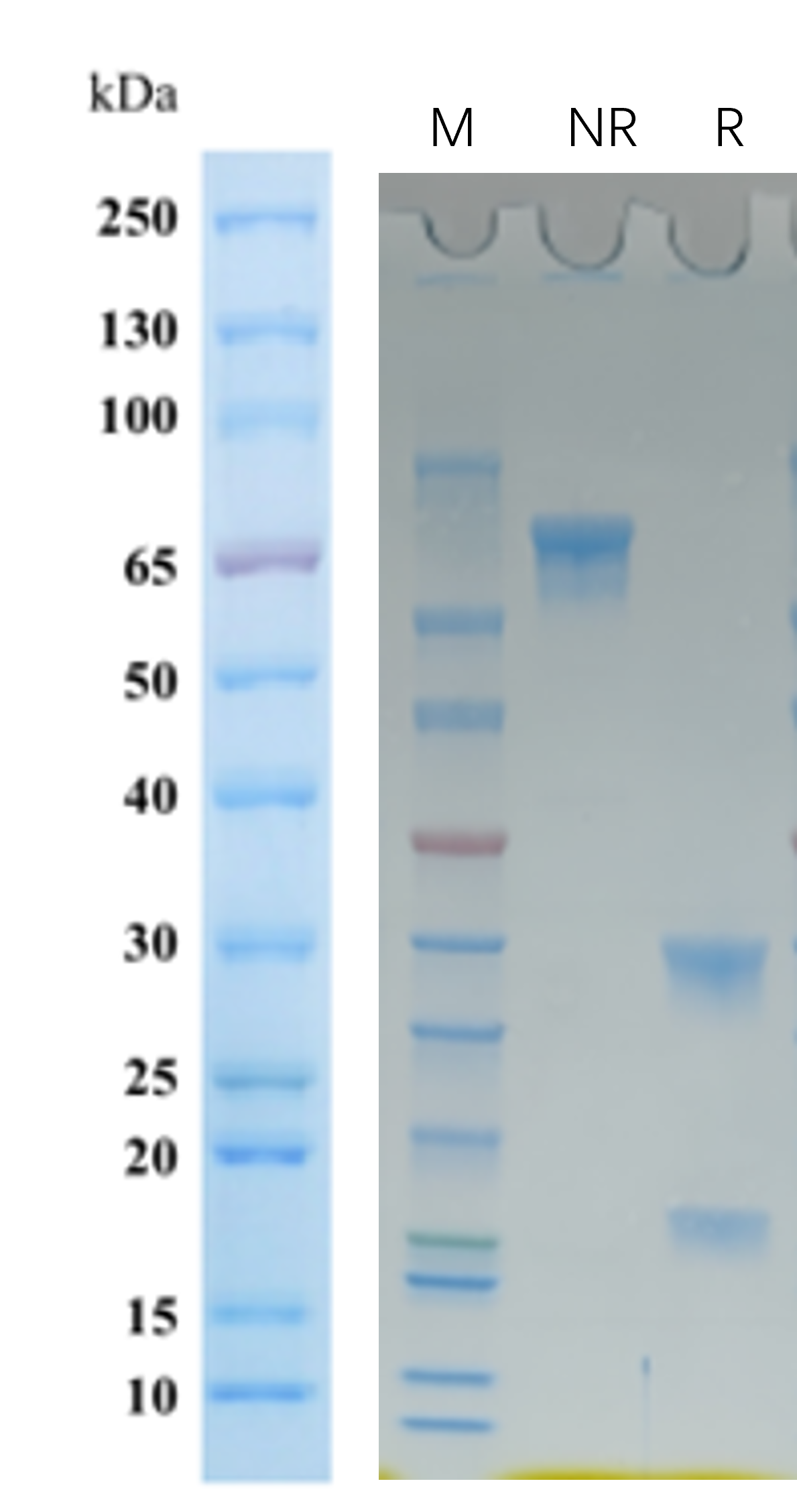
| Purity | > 95% as determined by SDS-PAGE |
| Sterility | 0.22 μm Filtered |
| Clone | sibeprenlimab |
| Source/Isotype | Human IgG2 Kappa |
| Application | Bioactivity-ELISA |
| Specificity | Detects APRIL |
| Gene | APRIL |
| Other Names | APRIL, TNFSF13, TALL-2, TRDL-1, CD256, TALL2, ZTNF2 |
| Gene ID | 8741 (human) |
| Background | APRIL is a type II TNF superfamily membrane protein encoded by TNFSF13 (also TNFSF13A). It is expressed in various immune and some non-hematopoietic cells. It exists in membrane-bound and soluble forms (soluble via shedding). APRIL promotes B cell survival, maturation, differentiation, and immunoglobulin production; its dysregulation is linked to autoimmunity and certain hematologic cancers. APRIL binds primarily to TACI and BCMA receptors, activating canonical and noncanonical NF-κB and MAPK pathways. This upregulates anti-apoptotic genes (e.g., BCL2 family) and plasma cell differentiation factors, supporting long-lasting humoral responses. APRIL can cooperate with BAFF to modulate signaling. Dysregulated APRIL–receptor signaling is associated with autoimmunity, making it a therapeutic target in diseases like SLE and monoclonal gammopathies. |
| Formulation | Phosphate-buffered solution, pH 7.2-7.4. |
| Endotoxin | < 1 EU/mg, determined by LAL gel clotting assay |
| Expression System | CHO |
| Aggregation | < 5% as determined by SEC-HPLC |
| Purity | > 95% as determined by SDS-PAGE |
| Sterility | 0.22 μm Filtered |
| Clone | sibeprenlimab |
| Source/Isotype | Human IgG2 Kappa |
| Application | Bioactivity-ELISA |
| Specificity | Detects APRIL |
| Gene | APRIL |
| Other Names | APRIL, TNFSF13, TALL-2, TRDL-1, CD256, TALL2, ZTNF2 |
| Gene ID | 8741 (human) |
| Background | APRIL is a type II TNF superfamily membrane protein encoded by TNFSF13 (also TNFSF13A). It is expressed in various immune and some non-hematopoietic cells. It exists in membrane-bound and soluble forms (soluble via shedding). APRIL promotes B cell survival, maturation, differentiation, and immunoglobulin production; its dysregulation is linked to autoimmunity and certain hematologic cancers. APRIL binds primarily to TACI and BCMA receptors, activating canonical and noncanonical NF-κB and MAPK pathways. This upregulates anti-apoptotic genes (e.g., BCL2 family) and plasma cell differentiation factors, supporting long-lasting humoral responses. APRIL can cooperate with BAFF to modulate signaling. Dysregulated APRIL–receptor signaling is associated with autoimmunity, making it a therapeutic target in diseases like SLE and monoclonal gammopathies. |
| Formulation | Phosphate-buffered solution, pH 7.2-7.4. |
| Endotoxin | < 1 EU/mg, determined by LAL gel clotting assay |