








Human TNF alpha Protein; His Tag
货号
GM-88209RP
规格
100 μg
1 mg
立即询价
产品简介
数据展示
相关产品
产品简介
Alternative Names DIF, TNF-alpha, TNFA, TNFSF2, TNFα
Source Human TNF alpha Protein; His Tag (GM-88209RP) is expressed from human 293 cells (HEK-293). It contains AA Val 77 - Leu 233 (Accession # P01375).
This protein carries a His tag at the C-terminus.
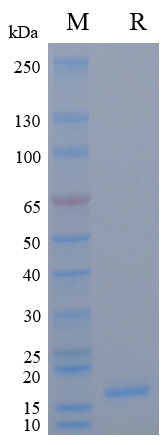
Purity > 95% as determined by SDS-PAGE
Endotoxin < 1 EU/μg, determined by LAL gel clotting assay
Predicted Mol Mass 18.2 KDa
Formulation Supplied as a 0.2 μm filtered solution of PBS, pH7.2-7.4.
Description TNF-α is a key pro-inflammatory cytokine in the TNF superfamily, encoded by the TNFA (TNF) gene and commonly referred to as TNF-α or TNFSF2. It is produced by a broad range of cells, including macrophages, T cells, and other immune and non-immune cells, and exists in membrane-bound and soluble forms. TNF-α plays a central role in mediating inflammation, apoptosis, cell proliferation, and host defense, with dysregulation linked to inflammatory diseases, sepsis, and cancer.
TNF-α signals primarily through its receptors TNFR1 (p55) and TNFR2 (p75), triggering multiple pathways. TNFR1 activation commonly leads to NF-κB and MAPK signaling, promoting transcription of inflammatory genes, survival factors, and sometimes apoptosis via caspase cascades. TNFR2 mainly modulates immune cell activation and can enhance TNF-α–driven responses. Cross-talk with other cytokines shapes the intensity and duration of inflammation. Therapeutically, TNF-α inhibitors are used to treat autoimmune diseases, but neutralization must balance infection risk and immune suppression.

Alternative Names DIF, TNF-alpha, TNFA, TNFSF2, TNFα
Source Human TNF alpha Protein; His Tag (GM-88209RP) is expressed from human 293 cells (HEK-293). It contains AA Val 77 - Leu 233 (Accession # P01375).
This protein carries a His tag at the C-terminus.
Purity > 95% as determined by SDS-PAGE
Endotoxin < 1 EU/μg, determined by LAL gel clotting assay
Predicted Mol Mass 18.2 KDa
Formulation Supplied as a 0.2 μm filtered solution of PBS, pH7.2-7.4.
Description TNF-α is a key pro-inflammatory cytokine in the TNF superfamily, encoded by the TNFA (TNF) gene and commonly referred to as TNF-α or TNFSF2. It is produced by a broad range of cells, including macrophages, T cells, and other immune and non-immune cells, and exists in membrane-bound and soluble forms. TNF-α plays a central role in mediating inflammation, apoptosis, cell proliferation, and host defense, with dysregulation linked to inflammatory diseases, sepsis, and cancer.
TNF-α signals primarily through its receptors TNFR1 (p55) and TNFR2 (p75), triggering multiple pathways. TNFR1 activation commonly leads to NF-κB and MAPK signaling, promoting transcription of inflammatory genes, survival factors, and sometimes apoptosis via caspase cascades. TNFR2 mainly modulates immune cell activation and can enhance TNF-α–driven responses. Cross-talk with other cytokines shapes the intensity and duration of inflammation. Therapeutically, TNF-α inhibitors are used to treat autoimmune diseases, but neutralization must balance infection risk and immune suppression.

数据展示
纯度
亲和力
相关产品
For laboratory research use only. Direct human use, including taking orally and injection and clinical use are forbidden.
Human TNF alpha Protein; His Tag
货号
GM-88209RP
规格
100 μg
1 mg
立即询价
产品简介
数据展示
相关产品
产品简介
Alternative Names DIF, TNF-alpha, TNFA, TNFSF2, TNFα
Source Human TNF alpha Protein; His Tag (GM-88209RP) is expressed from human 293 cells (HEK-293). It contains AA Val 77 - Leu 233 (Accession # P01375).
This protein carries a His tag at the C-terminus.
Purity > 95% as determined by SDS-PAGE
Endotoxin < 1 EU/μg, determined by LAL gel clotting assay
Predicted Mol Mass 18.2 KDa
Formulation Supplied as a 0.2 μm filtered solution of PBS, pH7.2-7.4.
Description TNF-α is a key pro-inflammatory cytokine in the TNF superfamily, encoded by the TNFA (TNF) gene and commonly referred to as TNF-α or TNFSF2. It is produced by a broad range of cells, including macrophages, T cells, and other immune and non-immune cells, and exists in membrane-bound and soluble forms. TNF-α plays a central role in mediating inflammation, apoptosis, cell proliferation, and host defense, with dysregulation linked to inflammatory diseases, sepsis, and cancer.
TNF-α signals primarily through its receptors TNFR1 (p55) and TNFR2 (p75), triggering multiple pathways. TNFR1 activation commonly leads to NF-κB and MAPK signaling, promoting transcription of inflammatory genes, survival factors, and sometimes apoptosis via caspase cascades. TNFR2 mainly modulates immune cell activation and can enhance TNF-α–driven responses. Cross-talk with other cytokines shapes the intensity and duration of inflammation. Therapeutically, TNF-α inhibitors are used to treat autoimmune diseases, but neutralization must balance infection risk and immune suppression.

Alternative Names DIF, TNF-alpha, TNFA, TNFSF2, TNFα
Source Human TNF alpha Protein; His Tag (GM-88209RP) is expressed from human 293 cells (HEK-293). It contains AA Val 77 - Leu 233 (Accession # P01375).
This protein carries a His tag at the C-terminus.
Purity > 95% as determined by SDS-PAGE
Endotoxin < 1 EU/μg, determined by LAL gel clotting assay
Predicted Mol Mass 18.2 KDa
Formulation Supplied as a 0.2 μm filtered solution of PBS, pH7.2-7.4.
Description TNF-α is a key pro-inflammatory cytokine in the TNF superfamily, encoded by the TNFA (TNF) gene and commonly referred to as TNF-α or TNFSF2. It is produced by a broad range of cells, including macrophages, T cells, and other immune and non-immune cells, and exists in membrane-bound and soluble forms. TNF-α plays a central role in mediating inflammation, apoptosis, cell proliferation, and host defense, with dysregulation linked to inflammatory diseases, sepsis, and cancer.
TNF-α signals primarily through its receptors TNFR1 (p55) and TNFR2 (p75), triggering multiple pathways. TNFR1 activation commonly leads to NF-κB and MAPK signaling, promoting transcription of inflammatory genes, survival factors, and sometimes apoptosis via caspase cascades. TNFR2 mainly modulates immune cell activation and can enhance TNF-α–driven responses. Cross-talk with other cytokines shapes the intensity and duration of inflammation. Therapeutically, TNF-α inhibitors are used to treat autoimmune diseases, but neutralization must balance infection risk and immune suppression.

数据展示
纯度
亲和力
相关产品
Tel: 400-627-9288
留言咨询
重置
提交
客服
微信
电话
留言
留言咨询
重置
提交