








| Alternative Names | IGF-I, IGF1A, somatomedin C, MGF, insulin-like growth factor 1 |
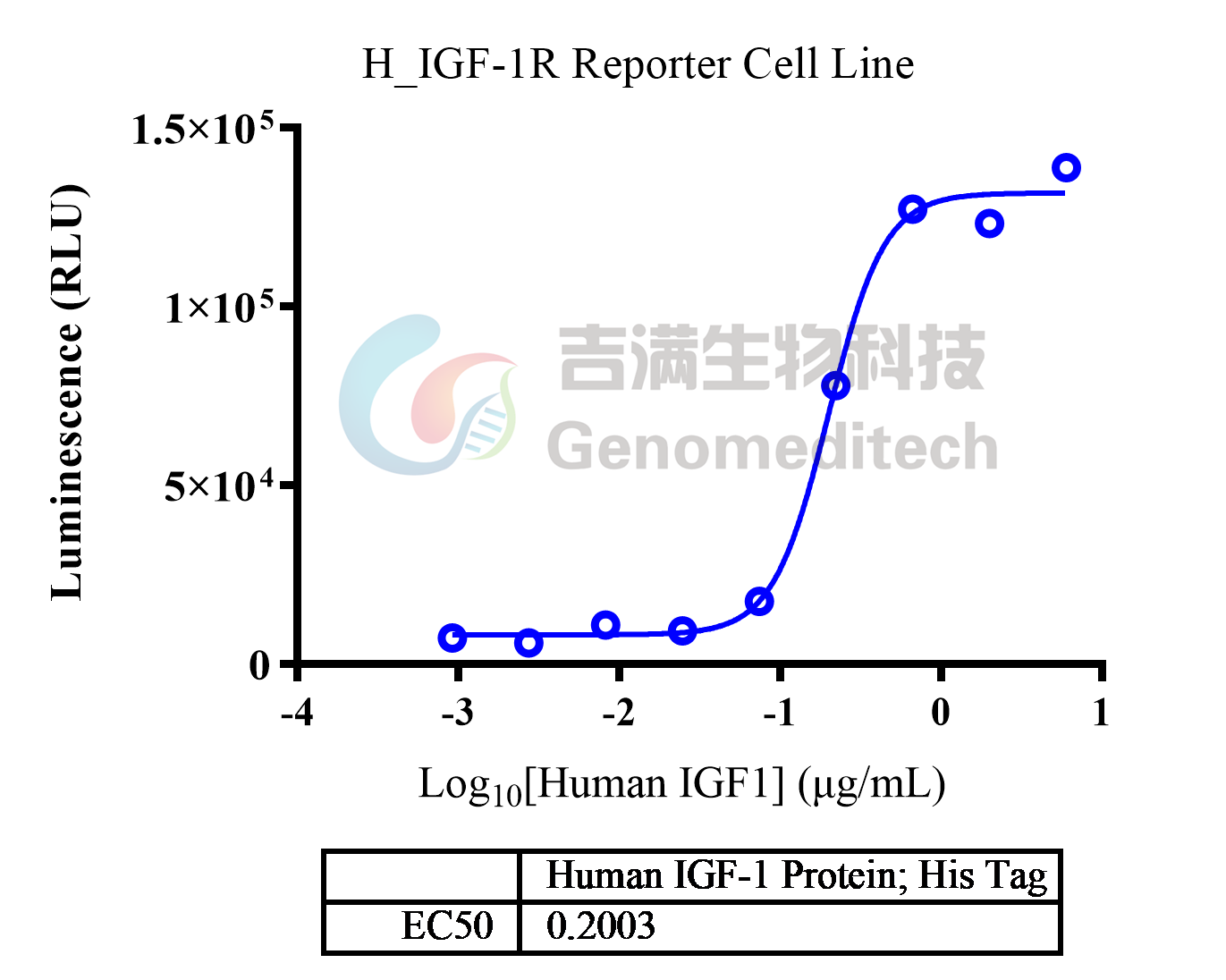
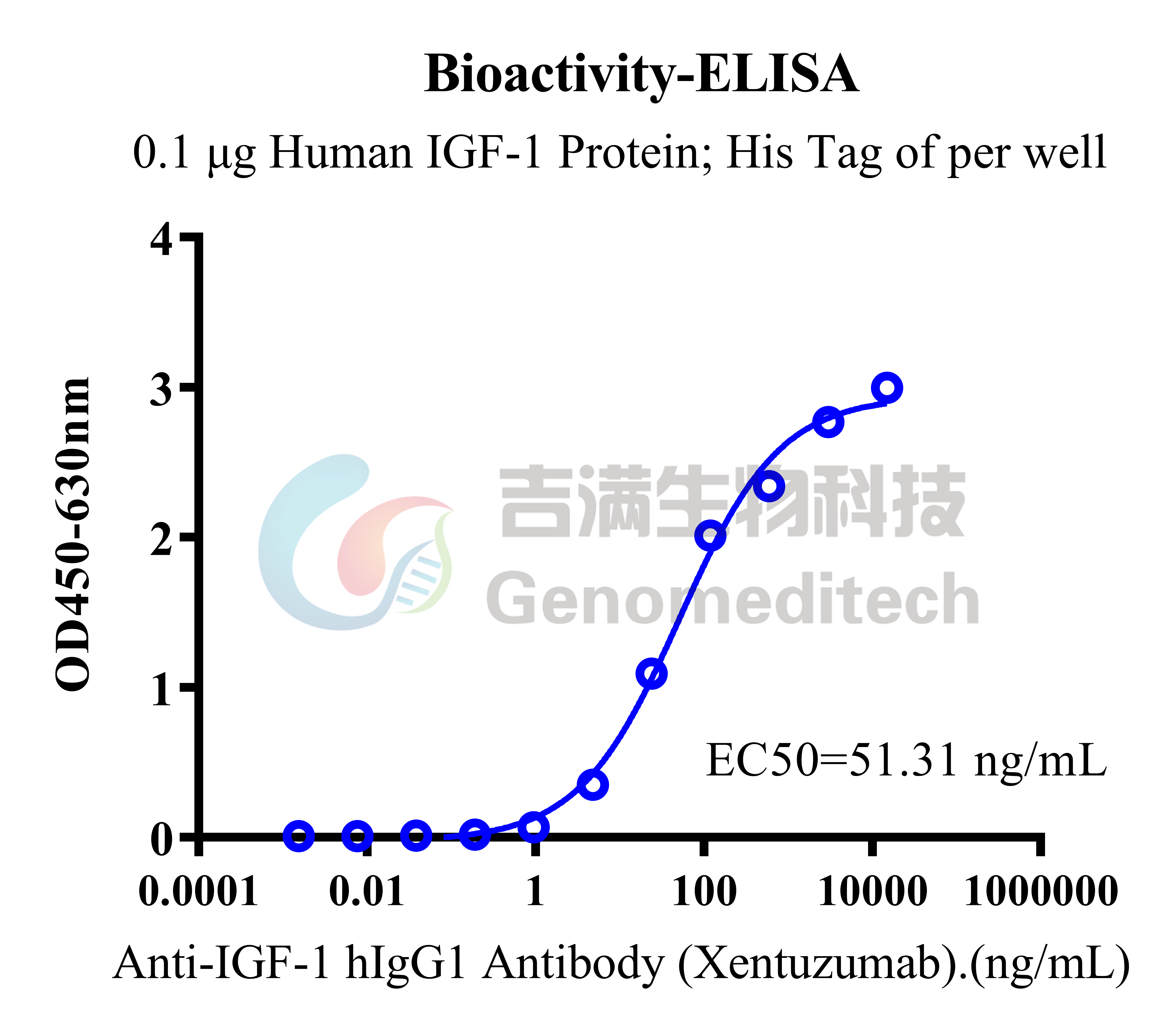
| Source | Human IGF-1 Protein; His Tag (GM-87635RP) is expressed from human 293 cells (HEK-293). It contains AA Gly 49 - Ala 118 (Accession # P05019-1). This protein carries a His tag at the N-terminus. |
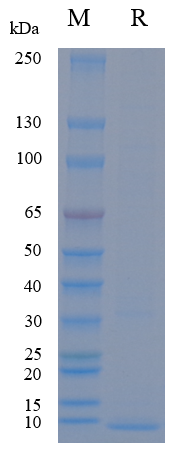
| Purity | > 90% as determined by SDS-PAGE |
| Endotoxin | < 1 EU/μg, determined by LAL gel clotting assay |
| Predicted Mol Mass | 8.5 KDa |
| Formulation | Supplied as a 0.2 μm filtered solution of PBS, pH7.2-7.4. |
| Description | IGF-1, or insulin-like growth factor 1, is a peptide hormone primarily produced in the liver under the influence of growth hormone (GH). It plays a key role in growth and development, mediating the actions of GH on systemic body growth, bone formation, and muscle hypertrophy. IGF-1 circulates in the bloodstream mostly bound to IGF-binding proteins (IGFBPs), which modulate its bioavailability and activity. The peptide has a high degree of homology to insulin and exerts its effects through specific receptor signaling, with critical roles in cellular proliferation, differentiation, and metabolism. IGF-1 signals mainly through the IGF-1 receptor (IGF1R), a receptor tyrosine kinase. Upon ligand binding, IGF1R activates downstream pathways, notably the PI3K-Akt-mTOR axis, promoting protein synthesis, cell survival, and metabolic regulation, as well as the MAPK/ERK pathway, which contributes to cell proliferation and differentiation. This signaling is tightly regulated by IGF-binding proteins (IGFBPs) and proteases, which control ligand availability. Dysregulation of IGF-1 signaling has been linked to growth disorders and various diseases, including cancer and metabolic syndromes. |
| Alternative Names | IGF-I, IGF1A, somatomedin C, MGF, insulin-like growth factor 1 |
| Source | Human IGF-1 Protein; His Tag (GM-87635RP) is expressed from human 293 cells (HEK-293). It contains AA Gly 49 - Ala 118 (Accession # P05019-1). This protein carries a His tag at the N-terminus. |
| Purity | > 90% as determined by SDS-PAGE |
| Endotoxin | < 1 EU/μg, determined by LAL gel clotting assay |
| Predicted Mol Mass | 8.5 KDa |
| Formulation | Supplied as a 0.2 μm filtered solution of PBS, pH7.2-7.4. |
| Description | IGF-1, or insulin-like growth factor 1, is a peptide hormone primarily produced in the liver under the influence of growth hormone (GH). It plays a key role in growth and development, mediating the actions of GH on systemic body growth, bone formation, and muscle hypertrophy. IGF-1 circulates in the bloodstream mostly bound to IGF-binding proteins (IGFBPs), which modulate its bioavailability and activity. The peptide has a high degree of homology to insulin and exerts its effects through specific receptor signaling, with critical roles in cellular proliferation, differentiation, and metabolism. IGF-1 signals mainly through the IGF-1 receptor (IGF1R), a receptor tyrosine kinase. Upon ligand binding, IGF1R activates downstream pathways, notably the PI3K-Akt-mTOR axis, promoting protein synthesis, cell survival, and metabolic regulation, as well as the MAPK/ERK pathway, which contributes to cell proliferation and differentiation. This signaling is tightly regulated by IGF-binding proteins (IGFBPs) and proteases, which control ligand availability. Dysregulation of IGF-1 signaling has been linked to growth disorders and various diseases, including cancer and metabolic syndromes. |