




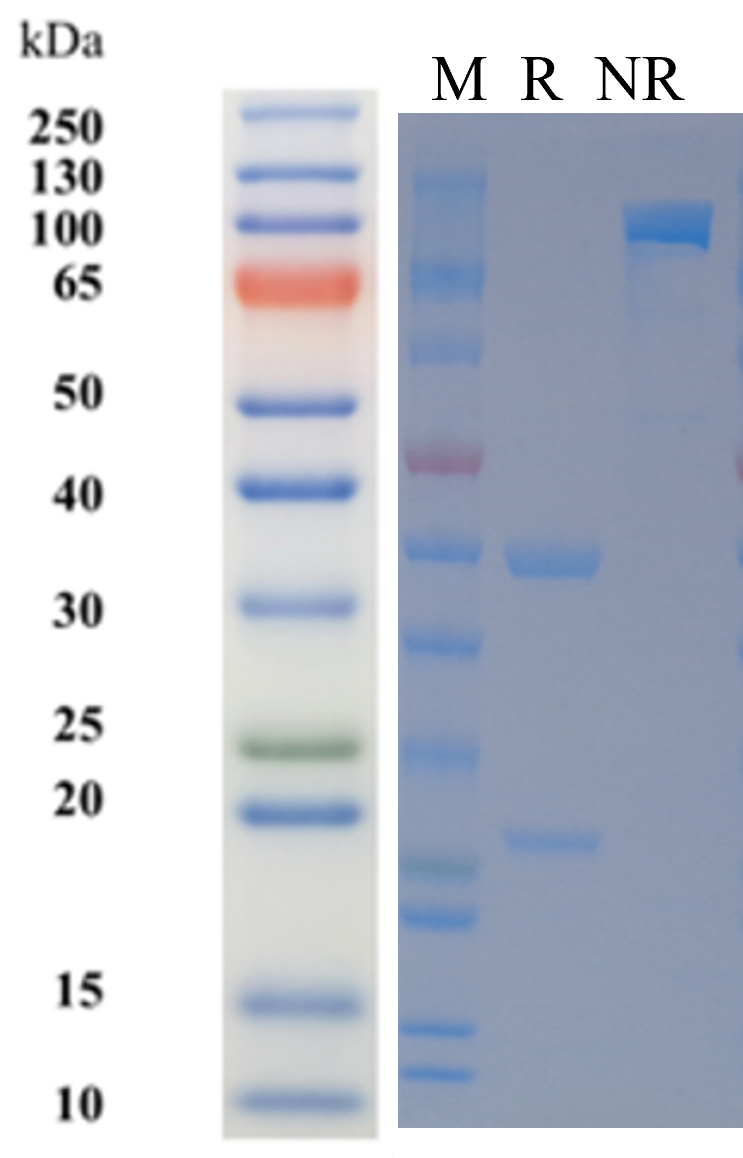
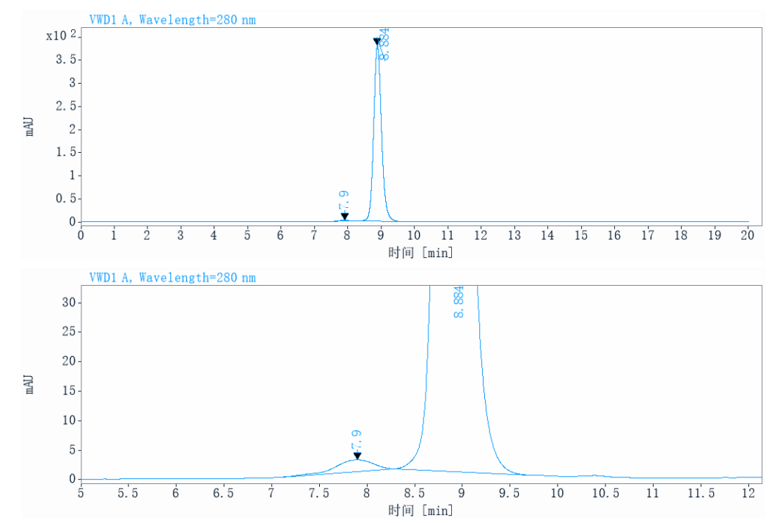




| Species Reactivity | Human |
| Clone | PR301127 |
| Source/Isotype | Human IgG1(D356E, L358M, G446-K447del), Kappa |
| Application | / |
| Target | Detects LIFR |
| Gene | LIFR |
| Other Names | CD118, LIF-R, SJS2, STWS, SWS |
| Gene ID | 3977 (Human) |
| Background | The LIF gene (leukemia inhibitory factor receptor gene) is a key gene located in the 3.1 sub-band (5p13.1) of the short arm 1 of human chromosome 5. It is 120,443 bp in length and contains 20 exons, it encodes a member of the type I cytokine receptor family, whose protein products bind to gp130 to form a receptor complex that mediates the signaling of leukemia inhibitory factor (LIF) , a key factor in the pathogenesis of leukemia, lif is involved in cell differentiation, proliferation, survival, immune regulation and other core physiological processes. LIFR promotes the secretion of cholesterol and the chemokine CXCL1 from hepatocytes by activating the STAT3 signaling pathway, and drives the release of hepatocyte growth factor (HGF) from bone marrow neutrophil, thereby accelerating liver repair and regeneration; at the same time, LIFR promotes the release of hepatocyte growth factor (HGF) from bone marrow neutrophil, the expression of LIFR is significantly down-regulated in liver cancer. Its deletion can enhance the resistance of tumors to ferroptosis and promote carcinogenesis, while overexpression can enhance the ability of liver repair and become a potential therapeutic target for liver diseases. In tumor biology, LIFR promotes the progression, immune escape and chemotherapy resistance of gastric cancer, breast cancer and colorectal cancer through JAK/STAT3, MAPK/ERK and Hippo-YAP pathways. In addition, mutations in the LIFR gene are directly associated with Schwartz-Jampel syndrome type 2, and its promoter is associated with the translocation (T (5; 8)(P13; Q12)) of pleomorphic adenoma gene 1 in the salivary gland. |
| Storage | Store at 2-8℃ short term (1-2 weeks).Store at ≤ -20℃ long term. Avoid repeated freeze-thaw. |
| Formulation | Supplied as a 0.2 μm filtered solution of PBS, pH7.2-7.4. |
| Endotoxin | < 1 EU/mg, determined by LAL gel clotting assay |
| Species Reactivity | Human |
| Clone | PR301127 |
| Source/Isotype | Human IgG1(D356E, L358M, G446-K447del), Kappa |
| Application | / |
| Target | Detects LIFR |
| Gene | LIFR |
| Other Names | CD118, LIF-R, SJS2, STWS, SWS |
| Gene ID | 3977 (Human) |
| Background | The LIF gene (leukemia inhibitory factor receptor gene) is a key gene located in the 3.1 sub-band (5p13.1) of the short arm 1 of human chromosome 5. It is 120,443 bp in length and contains 20 exons, it encodes a member of the type I cytokine receptor family, whose protein products bind to gp130 to form a receptor complex that mediates the signaling of leukemia inhibitory factor (LIF) , a key factor in the pathogenesis of leukemia, lif is involved in cell differentiation, proliferation, survival, immune regulation and other core physiological processes. LIFR promotes the secretion of cholesterol and the chemokine CXCL1 from hepatocytes by activating the STAT3 signaling pathway, and drives the release of hepatocyte growth factor (HGF) from bone marrow neutrophil, thereby accelerating liver repair and regeneration; at the same time, LIFR promotes the release of hepatocyte growth factor (HGF) from bone marrow neutrophil, the expression of LIFR is significantly down-regulated in liver cancer. Its deletion can enhance the resistance of tumors to ferroptosis and promote carcinogenesis, while overexpression can enhance the ability of liver repair and become a potential therapeutic target for liver diseases. In tumor biology, LIFR promotes the progression, immune escape and chemotherapy resistance of gastric cancer, breast cancer and colorectal cancer through JAK/STAT3, MAPK/ERK and Hippo-YAP pathways. In addition, mutations in the LIFR gene are directly associated with Schwartz-Jampel syndrome type 2, and its promoter is associated with the translocation (T (5; 8)(P13; Q12)) of pleomorphic adenoma gene 1 in the salivary gland. |
| Storage | Store at 2-8℃ short term (1-2 weeks).Store at ≤ -20℃ long term. Avoid repeated freeze-thaw. |
| Formulation | Supplied as a 0.2 μm filtered solution of PBS, pH7.2-7.4. |
| Endotoxin | < 1 EU/mg, determined by LAL gel clotting assay |